
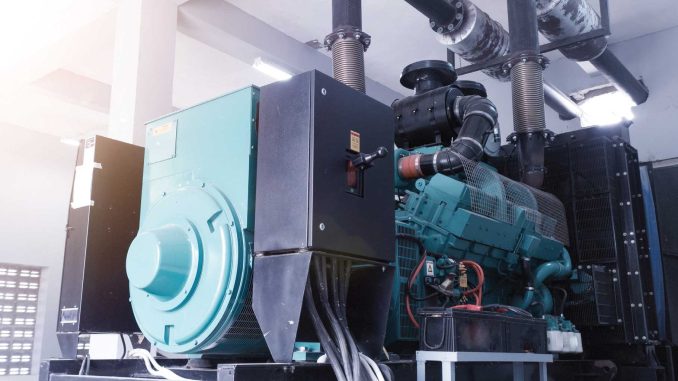
While peak and energy deficits have significantly improved over the years, there is a need for continuous and consistent power supply for key and energy-intensive sectors such as manufacturing, construction, healthcare and other residential and commercial segments. As the demand for flexible power has risen diesel and gas gensets have seen significant innovations over the years to meet the energy demands of these sectors. From greener technologies and alternative fuel gensets to digitalised offerings and control systems, the industry has focused its efforts on aligning market demands, societal trends and new regulatory requirements.
Market trends
Diesel engines and gensets are designed to meet a variety of power requirements across diverse sectors. Their adaptability makes them capable of three primary operating roles: standby backup power prime/continuous power, and peak shaving power. For standby back-up power applications, they act as an emergency power source during unexpected utility outages. For prime/continuous power applications, they are used as the main power source where grid power is unavailable or unreliable. For peak shaving power, they reduce energy drawn from the grid during times of high demand (peak periods), thereby lowering utility costs.
With respect to power ratings, diesel engines and gensets are categorised as low (below 75 kVA), medium (75-350 kVA), and high (above 350 kVA). The low-rated diesel engines and gensets are often used in hospitals, data centres, emergency services, residential infrastructure and critical infrastructure that require uninterrupted power for essential systems. The medium-rated diesel gensets are deployed in remote construction sites, mining operations, oil and gas fields, and off-grid manufacturing units. The high-rated diesel gensets are used in large commercial and industrial operations that face expensive peak demand charges, as well as facilities that optimise energy use for cost management or grid stability, such as manufacturing plants, data centres and hospitals.
As per the Central Electricity Authority (CEA), the installed grid-connected capacity of diesel generators in India stands at 589.20 MW or 0.12 per cent of total installed capacity, as of June 2025. Most of the capacity is situated in the southern region, majorly dominated by Tamil Nadu (211.70 MW), followed by Kerala (159.96 MW), Andhra Pradesh (36.80 MW) and Karnataka (25.20 MW). The rest of the capacities are located in union territories such as the Andaman & Nicobar Islands (92.71 MW) and Lakshadweep (26.83 MW), as well as in the north-eastern state of Manipur (36 MW). The total electricity generation in FY 2025-26 (April to June 2025) from diesel-based power plants in India stood at around 114.63 MUs.
Demand drivers
Diesel engines are critical for off-grid or primary power applications across a wide range of sectors due to their dependability and cost-effectiveness.
Independent power producers (IPPs) use diesel generators to provide flexible and dependable electricity in rural locations with poor grid access, or as grid stability backups. High-efficiency diesel generators for IPPs are often designed to meet variable power demands without compromising output stability.
In the mining industry, diesel engines and generators facilitate reliable operations. Large transport vehicles, shovels and drills are powered by diesel engines that generate substantial power. Assuring that production objectives are achieved in a safe and efficient manner, their dependability facilitates continuous mining operations. The Ministry of Coal aims to ramp up domestic coal production by 42 per cent to reach 1,533 million tonnes by 2030-31. Therefore, the coal mining sector is anticipated to experience growth, which will increase the demand for diesel engines and gensets in the near future.
The management and protection of enormous amounts of data necessitates uninterrupted electricity in data centres, which are the foundation of the digital economy. Diesel generators are indispensable for providing emergency backup and redundancy solutions, guaranteeing seamless functioning and data integrity at data centres during power outages. Further, the industry’s dedication to environmentally friendly operating procedures is being demonstrated by the move towards combining diesel with renewable energy sources. According to a report by Jefferies, India’s data centre market is likely to reach 17 GW of capacity, about a twelvefold increase over 2024, by 2030. The rapid growth of data centres is likely to drive the diesel engine and genset market due to the crucial need for highly reliable and immediate backup power.
In the manufacturing sector, diesel engines and gensets facilitate both main and backup power for manufacturing enterprises. These generators minimise downtime and maintain productivity by ensuring that manufacturing units continue to run during unforeseen power outages. Diesel engines and gensets’ capacity to deliver steady power under fluctuating loads becomes useful in heavy manufacturing environments where reliability is essential. The Indian government has prioritised the development of 14 identified sunrise sectors, including semiconductors, renewable energy components, medical devices, batteries and labour-intensive industries such as leather and textile, in order to increase the manufacturing sector’s contribution to the country’s GDP from 12 per cent to 23 per cent over the next two decades. As a result, the sector’s growth, also driven by programmes such as Make in India and production-linked incentive schemes, is anticipated to increase the demand for diesel engines and gensets.
Further, the need for diesel electric tower cars (DETCs) is being driven by Indian Railways’ (IR) ambitious goal of electrifying its broad-gauge network. These self-propelled DETCs patrol and maintain overhead wires on electrified roads, in addition to conducting inspections. As of March 2025, IR’s broad-gauge network electrification had reached approximately 98 per cent. However, total electrification has been hindered by obstacles in the north-eastern and southern regions. IR has revised its objective to complete the remaining 811 km route by the end of FY 2026. Therefore, DETCs might stimulate the diesel engine market by aiding the installation and testing of new or updated electric traction systems during railway electrification projects.
Diesel engines are the powerhouses of construction equipment, while diesel gensets guarantee a consistent, dependable power supply for safety infrastructure, tools and operations. Therefore, both are essential to the industry’s resilience and productivity. Their dominance is due to their durability, efficiency, ability to deliver high torque at low revolutions per minute, and capacity to function in challenging, off-grid or remote environments. For FY 2025-26, the Indian government has allocated Rs 11.21 trillion for infrastructure expansion projects in highways, smart cities and urban transit systems. The sector will witness substantial development momentum as a result of this transformative action, which will significantly increase the demand for construction and services.
Technology trends
Hybrid and fuel-agnostic gensets
To provide industrial and remote applications with reliable, efficient and cost-effective electricity, hybrid diesel gensets serve as advanced power solutions that integrate traditional diesel gensets with one or more additional energy sources, such as solar, wind or battery storage. Fuel-agnostic engine platforms and hybrid energy management solutions are being adopted to meet the evolving demands of customers while supporting their decarbonisation goals.
Such hybrid systems prioritise the utilisation of renewable energy sources when available, thereby reducing diesel duration and fuel consumption. In periods of intense wind or sunlight, the integrated renewable energy sources in the hybrid system either share or function at full capacity, while the diesel generator functions as a backup or serves to stabilise the load.
As a promising alternative to traditional diesel engines, multi-fuel solutions have been adopted. Diesel engines may run on several fuels, including diesel, biodiesel, kerosene, natural gas and ethanol mixes. The flexibility offered by the diesel engine’s ability to function on alternative fuel makes its performance robust and suitable for military, agricultural and industrial use, where fuel availability is quite inconsistent.
Players are focusing on developing biogas engines that are compatible with biodiesel and stoichiometric natural gas engines, aimed at reducing carbon emissions.
Likewise, hydrogen and diesel-powered dual fuel engines are becoming increasingly popular as a potential solution for decarbonising industries that are notoriously difficult to tackle, such as transportation, construction and mining. Hydrogen-diesel dual-fuel engines promise considerable reductions in emissions and greater operational flexibility.
Smarter and digital controls
Internet of things (IoT)-based diesel gensets use IoT technology to track, manage and improve the performance of diesel generators from a distance. This is changing how businesses, industries and important infrastructure use backup and main power systems. Smart diesel gensets can be started, stopped or scheduled remotely, reducing downtime and optimising energy usage. In addition, machine learning algorithms and analytics on IoT platforms can detect anomalies and forecast failures in smart diesel gensets, providing fast SMS/email notifications for faults, low fuel, oil pressure variations, overheating or illegal access. Hence, the advanced capabilities of smart diesel gensets are achieved through the use of a combination of hardware (such as sensors and telematics modules) and software (such as cloud-based interfaces, analytics and remote management applications).
Silent diesel gensets
Unlike conventional diesel generators, a silent diesel generator is a type of diesel-powered generator designed to run with much lower noise levels. Silent diesel generators are appropriate for backup and off-grid power requirements since they provide the same dependable, continuous power source as conventional diesel generators. A durable, composite material enclosure houses the diesel gensets. Multiple layers of porous materials, including both hard and flexible ones, are typically deployed to either absorb or reflect sound energy. Additionally, mufflers and exhaust systems that incorporate sound-absorbing components are implemented to mitigate the commotion generated by the expulsion of gases. Vibration is a major contributor to the noise generated by gensets; therefore, to lower noise levels, more vibration blockers are put in place. Consequently, silent diesel generators offer a dependable power source that is complemented by the advantage of quiet operations, rendering them particularly well-suited for environments and situations where sound pollution is a concern.
Challenges and the way forward
Governments worldwide, including India, have tightened air pollution rules. Non-essential diesel genset usage is restricted or banned in pollution-prone places such as India’s National Capital Region (NCR), further restricting the growth of the diesel engine and genset market. In this regard, manufacturers are now obligated to use advanced pollution control technologies such as diesel particle filters and selective catalytic reduction, increasing product complexity and expense.
For instance, in India, the Commission for Air Quality Management (CAQM) has acknowledged that air quality in cities such as Delhi-NCR has deteriorated due to large-scale diesel genset use. To curb emissions from diesel gensets, CAQM has issued multiple directives over the years, such as the Graded Response Action Plan in the Delhi-NCR region. These measures included the strict incorporation of retrofitted emission control devices and the adoption of dual-fuel gensets for capacities of 800 kW or above. Likewise, for gensets with capacities between 19 kW and 125 kW, the commission has directed the use of dual-fuel diesel gensets. This has lessened the appeal of diesel gensets in recent years.
Further, island regions such as Lakshadweep are likely to witness the phasing out of diesel engines for electricity generation and the transition to clean energy sources. The CEA is currently assessing the feasibility of connecting Lakshadweep to the mainland power infrastructure through undersea cables and evaluating possibilities for inter-island grid connectivity. Additionally, the use of battery energy storage systems is being explored to enhance grid reliability and mitigate energy intermittency at the island. This is likely to hinder the growth of the diesel engines and gensets market in India.
While diesel engines and gensets have played a significant role in delivering electricity to off-grid locations, their adoption rate among grid-connected residential, commercial and industrial consumers has decreased in recent years, due to the improvement in power supply in India. As of June 2025, the peak deficit stood at a mere 0.3 per cent and the energy deficit remained null, indicating sluggish growth in the diesel engine and genset market in the coming years.
Outlook
Providing dependable power still remains a priority in key power-intensive industries, data centres and construction projects. To ensure reliable power supply for critical applications and segments, diesel generator sets are likely to serve as essential sources of power supply until the grid becomes more robust. These engines power heavy machinery and lighting at remote sites, ensuring critical equipment remains functional during outages and keeping construction projects on track.
Further, though alternate battery storage and hydrogen technologies are progressing gradually, these technologies lack the same degree of dependability, durability and swift deployment capability for large load requirements or emergency situations, particularly in off-grid settings. Hence, the reliance on diesel engines and gensets is likely to continue.
The diesel genset industry is swiftly advancing due to smart controls, enhanced emissions management, superior fuel efficiency and innovative operating models (hybrid systems), thereby rendering gensets cleaner, quieter, more cost-effective and more aligned with contemporary infrastructure and sustainability objectives.