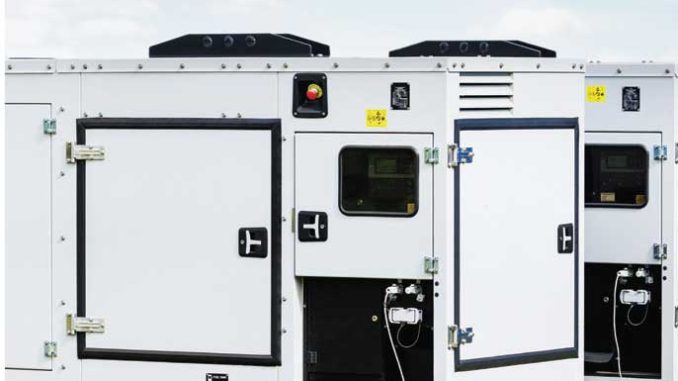
India’s gas genset market is undergoing a steady transition, driven by the rising demand for cleaner energy solutions and reliable backup power. Gas gensets produce less noise and fewer emissions than diesel gensets, making them an ideal source of clean, continuous power. Gas gensets offer stable backup power in outage-prone areas at lower operating costs. As per industry estimates, the gas genset market in India was valued at approximately $380 million-$400 million in 2024 and is projected to reach around $550 million-$570 million by 2033.
Market segmentation trends indicate increasing adoption of small-capacity gas gensets (below 75 kVA) across telecom towers, small businesses and residential complexes. Mid-sized industrial units and commercial establishments are driving demand in the 75-375 kVA range, while large-capacity gensets are slowly finding uptake in utilities and heavy industries. Commercial and industrial consumers currently account for the majority of demand, though adoption is steadily rising in urban residential pockets.
While the initial capital cost of gas gensets is typically 10-20 per cent higher than that of comparable diesel gensets, their lower operating expenses, due to reduced fuel costs, fewer maintenance cycles and no on-site fuel storage requirements, often result in a lower total cost of ownership over a period of three to five years, especially for high-usage applications.
Growth drivers
Multiple factors are contributing to the increased demand for gas gensets in India. One of the primary drivers is the tightening of emission norms for generator sets up to 800 kW, which is driving users to seek cleaner alternatives to diesel-based systems. The revised Central Pollution Control Board (CPCB) IV+ norms, effective from July 2023, now cover all generator sets up to 800 kW, requiring approximately 90 per cent reductions in nitrogen oxide (NOx) and particulate matter emissions. Diesel generator sets have become significantly more expensive due to the need for additional emission control technologies, prompting a shift towards gas-based gensets, which are a cleaner alternative.
Gas gensets emit negligible levels of soot or particulate matter and produce around 35-40 per cent lower NOx and carbon dioxide emissions compared to diesel units. Several industry reports indicate a growing preference for gas-based gensets among companies looking to align with tighter emission norms and broader sustainability targets.
In addition, rapid urbanisation, infrastructure development and recurring power outages are reinforcing the need for dependable backup systems. Sectors such as healthcare, data centres, IT services and manufacturing require uninterrupted power. Gas gensets, with lower emissions, quieter operation and reduced running costs, are emerging as an attractive solution.
The cost advantage of natural gas is another critical factor driving adoption. Compared to diesel, which is susceptible to price volatility due to international market fluctuations, natural gas offers more predictable pricing and lower costs. The total cost of ownership for gas gensets is lower, owing to reduced fuel and maintenance expenses. This makes them particularly appealing to high-load users such as industrial units and data centres, where operational efficiency directly affects profitability.
With improvements in generator technology, gas gensets now offer better fuel efficiency, enhanced reliability and lower noise levels. Remote monitoring capabilities and Internet of Things (IoT)-based management systems are also reducing manual intervention and improving uptime. These developments are strengthening the case for gas gensets as a viable alternative to diesel-powered backup systems, especially in commercial and industrial settings.
Technology trends
Recent years have seen significant technological advancements in gas gensets, making them more efficient, intelligent and user-friendly. One of the key innovations is the integration of IoT-enabled remote monitoring and control systems. These systems allow operators to track operational parameters such as fuel consumption, engine temperature, emission levels and maintenance schedules in real time, offering greater control and enabling predictive maintenance.
To meet stringent environmental standards, modern gas gensets are equipped with advanced emission control technologies such as three-way catalytic converters, lean-burn combustion systems and NOx reduction mechanisms. These technologies significantly reduce harmful pollutants and improve the environmental footprint of gensets, positioning them as a cleaner alternative to traditional diesel systems.
Fuel flexibility is another important area of innovation. Contemporary gas gensets can operate on a wide range of gaseous fuels, including natural gas, biogas, LPG and CNG. This adaptability allows users to optimise fuel sourcing based on availability and price, while enhancing energy security. Additionally, electronic engine management systems have become standard, offering precise control over fuel-air mixtures and ignition timing, which improves fuel efficiency and ensures stable performance under varying loads.
Hybrid-ready designs are also gaining traction. These systems allow gas gensets to be integrated with solar PV or battery energy storage systems, enabling better load balancing, reduced fuel consumption and alignment with sustainability goals. The hybrid approach is ideal for commercial campuses and smart buildings aiming to reduce their carbon footprints.
Noise reduction technologies are also advancing, with low-noise engine designs and enhanced acoustic enclosures making gas gensets more acceptable in residential and commercial settings. Further, the emergence of plug-and-play gensets is improving deployment speed and reducing complexity, especially in space-constrained urban environments. Many models now come with online metered fuel use, eliminating the need for on-site fuel storage and improving consumption tracking. These units are compact, easy to install and ideal for decentralised power applications.
Additionally, user interface advancements have made gas gensets more intuitive to operate. Features such as digital control panels, touchscreen human machine interfaces, programmable logic controllers and supervisory control and data acquisition integration are becoming increasingly common, enabling seamless automation and diagnostics. These features simplify operations while ensuring better visibility and control, especially in large-scale or multi-site applications.
Challenges
Despite the promising growth trajectory, India’s gas genset market faces a number of structural challenges. A major roadblock is the uneven spread of gas pipeline infrastructure across the country. In many remote and semi-urban regions, the lack of access to piped natural gas limits the viability of gas-based systems. In such areas, diesel gensets remain the default option due to their widespread availability and familiarity.
Another challenge is competition from renewable energy sources, particularly solar-plus-battery solutions. These technologies are rapidly becoming cost-competitive and benefit from favourable policy support, such as subsidies and net metering, unlike gas gensets, which currently lack targeted government incentives.
There is also a lack of awareness about gas gensets among residential users and small businesses. Many potential adopters are unaware of the long-term economic and environmental benefits, and this is compounded by the limited availability of trained technicians and service infrastructure outside metro regions. The relatively smaller dealer network compared to diesel gensets also creates hesitation in adoption, especially among first-time users.
Financing remains another constraint. Many financial institutions view gas gensets as a niche product with limited scale, making them reluctant to offer competitive financing or leasing options. This affects cost-sensitive buyers, especially in the MSME and residential segments, where the upfront cost remains a deterrent despite lower life cycle costs.
Technical issues such as gas quality inconsistency and pressure fluctuations in some regions can also impact performance and reliability. Additionally, the absence of clear product standardisation creates confusion in procurement decisions. Regulatory compliance and permitting, especially in high-density areas, can also create complexity.
Overcoming these barriers will require coordinated efforts. Policy clarity, expansion of gas distribution infrastructure, tailored financing models and targeted awareness campaigns will be essential to unlock the market’s full potential. Skill development programmes and the strengthening of after-sales service networks will also play a key role in driving wider adoption.
Outlook
The outlook for India’s gas genset market remains optimistic, driven by the convergence of environmental regulation, technological innovation and the broader shift towards sustainable energy. Demand is expected to grow steadily in metro cities, smart urban clusters and industrial corridors, where emission norms are stricter and users seek cleaner, more efficient power backup systems.
As gas gensets continue to evolve, featuring hybrid readiness, digital interfaces and remote operability, they are well suited to meet the requirements of decentralised, low-emission energy solutions. New genset models that support battery storage or dual-fuel capability will appeal to users transitioning towards renewables. Their scalability, combined with cost and environmental benefits, positions them as a practical transition technology as India advances towards a cleaner energy future.
With the natural gas grid expanding, and industries placing greater emphasis on operational efficiency and sustainability, gas gensets are poised to transition from being a niche alternative to a mainstream power backup option. Continued innovation, supported by supportive policy and financing mechanisms, will be critical to cementing their role in India’s energy ecosystem.
Aastha Sharma