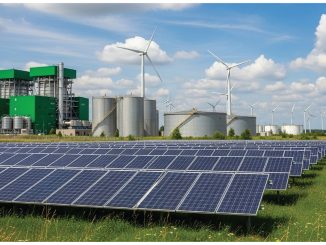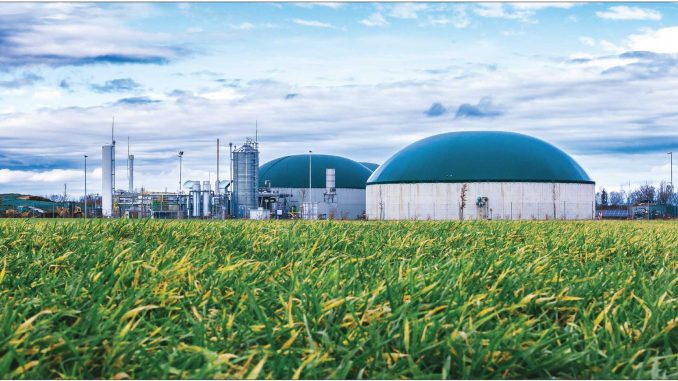
India’s compressed biogas (CBG) sector is gaining traction, backed by abundant biomass availability, supportive policy interventions, the need for sustainable waste management and a growing emphasis on domestic energy security. The sector is seen as a critical enabler of crude oil import reduction, soil health restoration, mitigation of pollution caused by biomass burning and advancement of India’s energy self-reliance goals.
India has a vast and diverse biomass base that can support a distributed and robust CBG production model. According to the Centre for Science and Environment, India’s feedstock availability comprises 190 million tonnes (mt) of animal and poultry waste, 150 mt of agricultural residue, 62 mt of municipal solid waste (MSW), 50 mt of biomass from sewage treatment plants and 20 mt of press mud. This biomass potential can support an estimated CBG production capacity of 62 mmt, with animal and poultry waste alone accounting for 41 per cent and surplus agri-residues for 32 per cent.
Another key consideration for increasing CBG production is the need to reduce the country’s import bill. India’s policy ambition of increasing the share of natural gas in the energy mix to 15 per cent by 2030 can inadvertently increase the import bill. As per the Petroleum Planning and Analysis Cell, in 2024-25, production stood at around 27,000 kilo tonnes (kt), while imports slightly exceeded it at approximately 28,000 kt, indicating a 51 per cent import dependence. As per EAC International Consulting, India’s natural gas demand is projected to rise to 155 mt by fiscal year 2030, and domestic production is not expected to match this pace, leading to a widening supply-demand gap. This rising import reliance exposes the country to global price volatility and geopolitical risks, thus making an even stronger case for increased CBG production.
SATAT and other policy initiatives
Policy support has been central to the CBG sector’s recent growth. The Sustainable Alternative Towards Affordable Transportation (SATAT) scheme remains a key policy incentive for the sector. The broader initiative, Galvanising Organic Bio-Agro Resources Dhan (GOBARdhan), a part of the Swachh Bharat Mission (Grameen), also aims to promote CBG projects.
Meanwhile, the CBG-CGD Synchronisation initiative, valid till 2033, aims to integrate CBG into the city gas distribution (CGD) network, facilitating its blending with piped natural gas (PNG) for domestic use and with compressed natural gas for transportation. The CBG pricing and transportation charges under these guidelines were revised in May 2025 to 85 per cent of the average CNG retail selling price, up from 80 per cent.
Furthermore, the Ministry of Petroleum and Natural Gas has issued guidelines for the development of pipeline infrastructure for injection of CBG into the CGD network. The allotted budget for this initiative is Rs 9.945 billion for the period 2024-25 to 2025-26. The Direct Pipeline Infrastructure scheme provides central financial assistance (CFA) of up to Rs 287.5 million per project for a maximum 75 km long pipeline (steel or medium-density polyethylene).
A new transportation fee structure for CBG supplied via cascade systems has also been introduced – Rs 1.50 per kg for distances of 50-75 km and Rs 2.50 per kg for over 75 km; no fee is applicable within 50 km. Furthermore, the updated CBG price has been fixed at Rs 1,478 per mmbtu (excluding GST), applicable from June 1, 2025 to October 31, 2025.
The compressed biogas obligation (CBO) is another positive policy initiative, aimed at creating assured offtake and improved demand. The CBO has been optional until 2024-25, but is mandatory from 2025-26. For fiscal years 2026, 2027 and 2028, the CBO has been set at 1 per cent, 3 per cent and 4 per cent of the overall consumption of CNG or PNG respectively. The CBO will increase to 5 per cent from 2028-29.
The Biomass Aggregation Machinery (BAM) scheme has also been launched, with an outlay of Rs 5.64 billion for the period 2023-24 to 2026-27, targeting one of the biggest challenges in the CBG value chain – feedstock availability. In July 2025, the government revised the CFA disbursement process for CBG projects to support the purchase of BAM. As per the updated guidelines, CBG plants with a minimum capacity of 2 tpd that use over 50 per cent biomass as feedstock are eligible to receive CFA of Rs 9 million. To qualify for this subsidy, projects must use at least 50 per cent or 3,000 mt of biomass annually and reach 25 per cent completion (50 per cent for fund release). Furthermore, projects using less than 50 per cent biomass but consuming more than 3,000 mt of biomass annually can still receive support – Rs 2.9 million per 3,000 mt of agricultural residue used. The financial aid is capped at 50 per cent of the biomass machinery’s procurement cost or Rs 2.9 million per project, whichever is lower, and is disbursed in proportion to the amount of biomass collected.
Moreover, under the Ministry of New and Renewable Energy’s National Bioenergy Programme, CFA is offered for various components relating to power generation, biogas/bio-CNG generation and briquette/pellet manufacturing.
Overall, targeted policy measures are being introduced for the entire value chain, from feedstock aggregation and briquette manufacturing to CBG production, blending and transport.
CBG project uptake gains traction
The uptake of CBG projects has shown positive momentum in recent years, even though the overall progress is short of the ambitious targets. As per the SATAT portal, 108 CBG plants have been commissioned, with 1,094 active letters of intent (LoIs) issued as of July 2025. This is far lower than the initiative’s initial aim of setting up 5,000 CBG plants by 2023-24.
Still, the CBG distribution infrastructure has slowly improved, as per recent data shared by several oil marketing com-panies (OMCs). CBG is now available across 64 geographical areas through the CGD network, as well as 350 retail outlets.
Meanwhile, the GOBARdhan portal indicates a wider pipeline of projects across the country. As of July 15, 2025, 1,083 projects have been registered on the portal, although a large implementation gap remains: 690 are yet to begin construction, 236 are under construction and only 147 are currently operational. The sector has witnessed a sharp rise in CBG plant numbers, from just three in 2019-20 to 100 by 2024-25. CBG sales grew from negligible levels to 42.8 thousand metric tonnes (tmt) in 2024-25 alone – over half of the total 79.2 tmt sold between September 2019 and March 2025. This surge reflects growing market readiness, especially among CGD operators and industrial consumers. Early data for 2025-26 indicates that the momentum has been maintained, with 13,379 tonnes of CBG already sold.
In terms of the project pipeline, Uttar Pradesh leads with 55 projects, followed by Maharashtra (27), Gujarat (23) and Madhya Pradesh (20). Uttar Pradesh tops the chart in terms of operational capacity too, with 32 functional plants, trailed by Gujarat (20) and Haryana (17). Significantly, these three leading states have implemented state-level bioenergy policies. More states, such as Punjab and Madhya Pradesh, are expected to follow suit.
Sector concerns and recommendations
CBG project costs remain high; viability improves with scale and policy support
According to discussions with CBG project developers, a 1 tpd CBG output project costs Rs 75 million-Rs 80 million for paddy straw-based plants. Thus, a typical 15 tpd plant will have a capex of Rs 1,125 million-Rs 1,200 million. Developers caution against misleading lower quotes for some projects, in the range of Rs 30 million-Rs 50 million/tpd, which could lead to dysfunctional or substandard plants.
According to developers, CBG plants become operationally and financially viable at a minimum capacity of 15 tpd of gas output, with the optimal size being 20 tpd or more. At this scale, the project is able to take advantage of economies of scale. Smaller plants, particularly those in the sub-10 tpd range, are considered largely non-viable unless they are subsidised heavily. These smaller plants struggle with operations and maintenance inefficiencies, underutilised resources, and higher per-unit capex and opex, often leading to poor financial performance.
To improve cost viability, developers have suggested that for the first 1,000 CBG plants, the government can fix a guaranteed gas price of Rs 100 per kg for 10 years, like the early feed-in tariffs in the solar and wind power sectors. This, coupled with policy stability, can help de-risk early investments and attract mainstream financial institutions. Another critical recommendation from developers is the introduction of green certificates to unlock another revenue stream and reduce dependence on the monetisation of CBG and manure.
Feedstock quality drives project returns, but logistics and regional disparities persist
Feedstock has emerged as a crucial determinant of the viability of CBG projects. Paddy straw has become the preferred feedstock for several developers due to its availability in key agrarian states and its chemical characteristics. It enables better gas yields and produces no liquid digestate, thus avoiding the complex handling and disposal requirements seen in press mud or MSW-based plants. Additionally, paddy straw allows for the production of useful by-products such as briquettes and pellets, which can help meet biomass co-firing obligations in thermal power plants. However, feedstock aggregation and supply chain management remain relatively weak in states outside of Punjab and Haryana. In other states, developers face fragmented supply chains, price volatility and logistical bottlenecks. For instance, the price of paddy straw, inclusive of storage and transport, ranges from Rs 2,800 per tonne in Punjab to Rs 3,600 per tonne in Chhattisgarh, highlighting regional disparities. Often, prices increase when the farmers realise there is a huge demand from CBG developers.
To address the challenge of aggregating seasonal biomass, some developers have taken up the role of biomass logistics providers. With investments in fleets of high-end balers and other equipment, they are not only supporting their own projects, but also offering machinery rental models for farmers and project developers.
Recent policy initiatives attempt to mitigate monetisation and pricing woes
A key challenge in the CBG sector lies in the monetisation of CBG and its by-products. CBG currently fetches Rs 74-Rs 81 per kg under the SATAT and CGD synchronisation mechanisms, which is roughly 85 per cent of the prevailing CNG retail price. Developers have pointed out that this pricing structure needs a rework, as it undervalues green gas compared to fossil-based CNG. Several developers argue that CBG, which actively displaces emissions and manages waste, deserves a premium, not a discount. Without premium pricing, there is a risk of CBG plants struggling to recover their capital investments from gas sales alone. Additionally, industrial offtake is limited, as most industries benchmark CBG against PNG or LPG, and are unwilling to pay a green premium in the absence of a regulatory mandate or carbon credit mechanism.
While several developers have begun monetising fermented organic manure (FOM) and liquid FOM, uptake remains inconsistent due to seasonal demand, transportation challenges and nutrient content constraints. The recent amend-ment to the Fertiliser Control Order, introducing a new category of organic enhancers and removing rigid nutrient norms, has been welcomed, especially for paddy-based CBG plants that inherently have low nitrogen output. Additionally, the provision of market development assistance under the Department of Fertilizers has improved the financial outlook for FOM producers, especially in bulk-sale models. That said, drying, granulation and packaging still involve significant costs, limiting profitability unless mechanised at scale.
Need for direct injection into pipelines
Another major point of concern for developers is the lack of grid access and uniform offtake infrastructure. For CBG plants larger than 10 tpd, cascading cylinders and transportation of gas to retail outlets are logistically unviable. In such cases, direct injection into CGD pipelines or structured offtake agreements with OMCs is essential. Yet, developers report that retail OMC outlets in rural areas typically have low CBG sales volumes (500-800 kg per day), constraining offtake. Without pipeline access or proximity to large gas consumers, even technically efficient plants operate well below capacity.
Financier concerns
Financiers face a complex risk landscape when evaluating CBG projects. A primary concern is the frequent mismatch between projected and actual project timelines, often extending beyond two years. Feedstock volatility has emerged as the most disruptive financial risk. Prices have risen far beyond initial assumptions, with no reliable price controls or long-term procurement mechanisms. This, coupled with inconsistent plant utilisation and unviable by-product monetisation, has eroded expected cash flows and weakened debt service coverage ratios.
The lack of cost standardisation and technology performance variability across regions are further complicating the financing scenario. The same plant size may have vastly different costs and outputs depending on feedstock and location, making due diligence more complex. Collateral demands, especially for first-time developers, remain high. While risk mitigation tools such as guarantees and concessional lending are emerging, they are not yet widely accessible. As a result, financiers now demand location-specific appraisals and stronger promoter credentials before lending.
Conclusion
Net, net, while CBG project uptake has been sluggish vis-à-vis the targets, policymakers have attempted to resolve stakeholder concerns. Developers, too, are learning from experience. They are gradually finding the right mix of fac-tors that can make a CBG project financially viable – the correct feedstock for a particular region, how to efficiently manage the supply chain, which mature technology to invest in, the right project scale and ways to realise more revenue through the sale of by-products.
The sector has been on a long learning curve; now, it seems set to leverage these lessons for larger overall gains.
Sakshi Bansal and Sarthak Takyar