India’s power sector is witnessing steady growth, supported by policy reforms, increasing investments and renewable capacity additions. Key milestones include surpassing the 50 per cent non-fossil capacity target ahead of schedule, progress in storage and electric mobility, and stronger grid infrastructure. However, challenges remain in renewable integration, distribution segment performance and scaling of storage. Power Line brings together leading experts to share their views on recent developments, key challenges and the way forward for the sector….
What is your assessment of the current state of the power sector? What have been the key achievements over the past year?
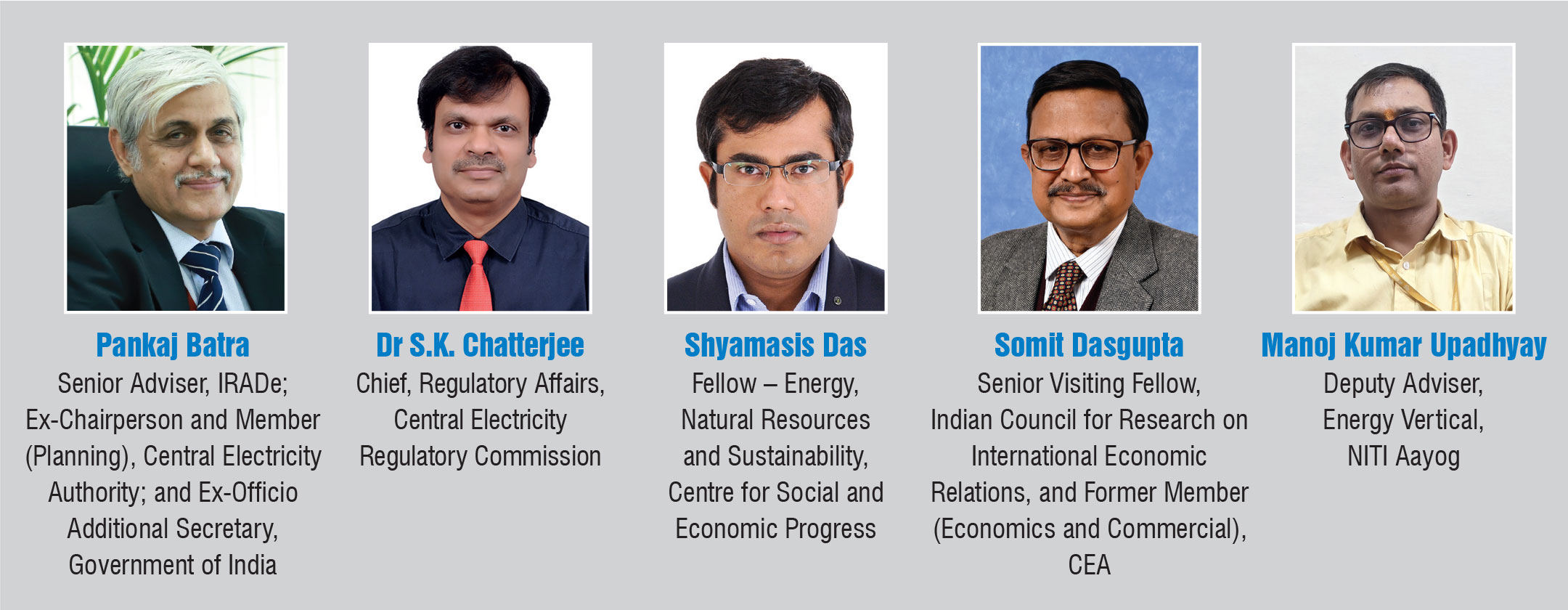
Pankaj Batra
The power sector has been progressing very well. The sector has become more professional since the implementation of the Electricity Act, 2003, which introduced path-breaking provisions that defined the roles of the Central Electricity Authority (CEA), regulatory commissions, the Appellate Tribunal for Electricity, transmission utilities and load despatch centres. It liberalised the setting up of generating stations, introduced competition and privatisation, and promoted efficiency through technical standards, power trading and the power exchange platform. This was followed by national policies such as the Electricity Policy (2005) and the Tariff Policy (2006), the grid code, availability-based tariff, planning frameworks and financial discipline measures, which further strengthened the system.
India moved from being power deficit till 2012-13 to surplus thereafter, later even exporting to neighbouring countries. Private sector generation capacity grew from 11 per cent of the total capacity in 2001-02 to about 40 per cent in 2012-13. As of March 31, 2025, the total generating capacity reached 475 GW (7.5 per cent growth over 2024), with renewables at 220 GW (15 per cent growth). In June 2025, India achieved its Nationally Determined Contributions (NDC) target of 50 per cent non-fossil fuel capacity five years ahead of schedule, with 242.8 GW of non-fossil capacity versus 242 GW of fossil fuel capacity.
Cross-border trade within Bangladesh, Bhutan, India and Nepal continued to expand, while an MoU was signed between India and Sri Lanka in April 2025 for high voltage direct current (HVDC) grid interconnection and joint solar projects. Regional cooperation also advanced through BIMSTEC’s Grid Interconnection Master Plan, aligned with the Green Grids Initiative and the One Sun, One World, One Grid initiative.
Domestically, electric vehicle (EV) promotion was strengthened through the PM E-DRIVE scheme, with charging consumption rising 82 per cent in 2024-25 as compared to the previous year, led by Delhi and Maharashtra. Renewable-plus-storage tenders by the Solar Energy Corporation of India (SECI) and NTPC are gaining traction, while the PM-KUSUM scheme achieved mixed results. Meanwhile, the Central Electricity Regulatory Commission (CERC) continues to refine market regulations for greater transparency and efficiency.
Dr S.K. Chatterjee
India’s electricity sector has undergone a remarkable transformation. With sustained economic growth, rapid electrification, and the rising penetration of new-age industries, electricity demand continues to grow. Non-fossil capacity has crossed 50 per cent of the total installed capacity, marking a significant milestone in the vision of achieving 500 GW of non-fossil capacity by 2030 and net zero by 2070. This achievement underscores India’s ability to expand renewable energy at scale while ensuring a reliable supply for a fast growing economy.
One of the most striking transformations has been India’s journey from power shortages to near-self-sufficiency. Peak shortages, which stood at 12 per cent in 2008-09, have fallen to near-zero in 2024-25, while the energy deficit has dropped from 11 per cent to just 0.1 per cent. This has been made possible by sustained capacity addition, with installed capacity rising from 148 GW in 2008-09 to 475 GW in 2024-25, at a CAGR of 7.6 per cent.
The renewable energy sector has taken a massive leap forward. From just 6 GW in 2004-05, renewable capacity has surged to 246 GW (including hydro) in 2025. Renewable generation (excluding large hydro) has nearly quadrupled in the past decade, from 65.8 BUs in 2015-16 to 255 BUs in 2024-25. India met an all-time record demand of 250 GW in May 2024, reflecting the sector’s resilience. The transmission network has also witnessed a quantum leap, enabling reliable evacuation and redundancy.
The short-term market has grown rapidly. The number of interstate trading licensees has doubled from 34 in March 2020 to 69 in March 2025. Volumes on power exchanges have risen from 7.2 BUs in 2008-09 to 143.8 BUs in 2024-25, at a CAGR of 22 per cent. Real-time market transactions, introduced in June 2020, have grown from 515 MUs to about 5,134 MUs in July 2025.
Energy transition has gained prominence worldwide, and India has taken bold steps in this direction. A robust regulatory framework has been put in place through the Grid Code, General Network Access, Transmission Pricing, Ancillary Services, Deviation Settlement Mechanism, and Power Market Regulations. Dedicated green market segments – green day-ahead and green term-ahead – provide avenues for renewable energy generators to sell power and help entities meet their renewable purchase obligations. Renewable energy certificate trading is also facilitating the growth of renewable energy.
The launch of financial derivatives marks another milestone. The CERC and the Securities and Exchange Board of India have approved contract specifications with safeguards to prevent market manipulation.
Shyamasis Das
India has achieved nearly 20 GW of net capacity addition so far in 2025-26, as per the latest data. Net capacity addition reflects the true generation mix as it accounts for retirements and shutdowns. About 830 MW of coal-based plants have been retired this year, while renewables, including large hydro, contributed over 17 GW, or 90 per cent of the total addition. This pushed the share of non-fossil fuel generation past 50 per cent in June, meeting India’s 2030 target ahead of time.
Solar dominates, accounting for 77 per cent of renewable additions as of July 2025. The pace of renewable expansion has accelerated, averaging 4,349 MW per month, up from 2,460 MW last year. If this pace is sustained, India could add over 50 GW of renewable capacity this year, compared to 30 GW in 2024-25. Energy storage is also gaining momentum, with 500 MWh already operational and 26 projects aggregating 67,000 MWh tendered as of August 2025. The 20 MW/40 MWh BSES Rajdhani Kilokari project in Delhi, India’s first utility-scale standalone battery energy storage system (BESS), exemplifies this trend. Policy support has expanded, with the Ministry of Power (MoP) approving viability gap funding (VGF) for 30 GWh of BESS, though per-MWh support has been reduced due to falling battery costs.
On the demand side, India’s peak reached 241 GW in June, lower than last year’s record of 250 GW, partly due to milder weather and early monsoon. Regulatory developments include the CERC’s order on phased market coupling starting January 2026, ensuring uniform pricing across exchanges. Draft amendments propose virtual power purchase agreements (PPAs), over-the-counter instruments such as BESS contracts, and stricter compliance rules.
Further, the Supreme Court has directed the regulatory commissions to liquidate discoms’ long-pending dues within four years, a move likely to trigger significant tariff hikes unless states intervene, potentially reshaping India’s power sector dynamics.
Somit Dasgupta
Purely in terms of meeting demand, we have done well, with some help from the weather gods. This year’s rainfall has been above average, which has helped keep electricity demand in check. Since we had touched 250 GW last year, we were expecting around 270 GW this year. However, the maximum demand recorded so far in 2025 has been only about 242 GW.
As for achievements, the fact that we have made some progress in building storage projects is creditworthy. Policies such as VGF for battery storage, guidelines for pumped storage projects (PSP), and the energy storage obligations seemed to have nudged the sector in the right direction. Around 30 GW of storage projects have been tendered in the last three years, though it will take some time for these to materialise, especially PSPs.
Another major milestone is the formulation of a derivatives market for the power sector. It will take some years for the derivatives market to deepen since even today, 90 per cent of generation is tied up in long-term PPAs. A derivatives market requires both the parties to have different perceptions about future power prices. In long-term PPAs, prices are known to both parties, which acts as a dampener for the growth of the derivatives market.
Manoj Kumar Upadhyay
Assessment of the current state of the power sector
- As of July 31, 2025, India’s total installed power capacity stood at 490 GW. Of this, coal-based capacity accounted for 223 GW, gas 20 GW, nuclear 8.8 GW, hydro 49.6 GW and renewable energy 187.8 GW (including 5 GW of small hydro, 52 GW of wind, 11.5 GW of biopower and 119 GW of solar capacity). The total non-fossil fuel capacity was 246 GW, which accounted for 50.25 per cent of the total installed capacity. India has surpassed its NDCs commitment five years ahead of the target year 2030.
- The country’s peak demand was 242.77 GW and peak met was 242.49 GW during April-June 2025. The peak shortage was only 0.1 per cent. Meanwhile, there was no energy shortage and the entire energy demand (445.19 BUs) was met during the same period.
- Further, India’s per capita electricity consumption was approximately 1,395 kWh in 2023-24, marking a substantial increase from about 1,331 kWh in 2022-23.
- As per International Renewable Energy Agency statistics 2025, India ranks fourth globally in renewable energy installed capacity, fourth in wind power and third in solar power capacity.
- AT&C losses grew from 15.3 per cent in FY 2023 to 16.3 per cent in FY 2024, due to a 1.2 percentage point decline in collection efficiency.
- The average cost of supply-average revenue realised gap decreased by 20 paise per unit, from Re 0.59 per kWh in FY 2023 to Re 0.39 per kWh in FY 2024, reducing the absolute cash gap to around Rs 580 billion.
Key achievements over the past year
- Electricity generation increased from 1,168 BUs in 2015-16 to an estimated 1,824 BUs in 2024-25. Similarly, the total installed capacity rose from 305 GW in 2015-16 to a projected 475 GW in 2024-25. Renewable energy capacity grew nearly three times, from 76.37 GW in March 2014 to 226.79 GW in June 2025.
- Renewable energy generation rose from 190.96 BUs in 2014-15 to 370.65 BUs in 2024-25 (April 2024-February 2025), with its share in overall power generation increasing from 17.2 per cent to around 22.2 per cent. Solar capacity grew more than 39 times, from 2.82 GW in 2014 to 110.9 GW in 2025, including a record 23.83 GW added in 2024-25 alone.
- Biopower generation capacity has increased from 8.1 GW to 11.6 GW over the past 11 years. Compressed biogas generation capacity expanded from a single project with a capacity of 8 tonnes per day (tpd) in 2014 to 150 projects with a cumulative capacity of 1,211 tpd as of March 2025.
- During this period, the MoP implemented key reforms to improve access, efficiency and reliability. Important initiatives include the creation of a unified national power grid; the Deen Dayal Upadhyaya Gram Jyoti Yojana for rural electrification; and the SAUBHAGYA scheme, the Revamped Distribution Sector Scheme (RDSS), PM Surya Ghar: Muft Bijli Yojana and Pradhan Mantri Janjati Adivasi Nyaya Maha Abhiyan for the electrification of unelectrified households of tribal and particularly vulnerable tribal groups.
- These initiatives led to a reduction in energy shortages from 4.2 per cent (2013-14) to 0.1 per cent (2024-25) and a 45.8 per cent increase in per capita electricity consumption to 1,395 kWh in 2023-24 from 957 kWh in 2013-14.
What are the biggest challenges facing the sector and how can these be addressed?
Pankaj Batra
The biggest challenge facing the power sector is the mindset of state discoms. While some states have shown progress, many still need renewed, forward-looking leadership. The exposure of discom engineers and officers to capacity-building programmes, new technologies and cultural change is vital. Training in change management, teamwork, emotional intelligence and motivation can help build cohesive teams. The central government’s initiative of linking reforms and results to financial support under the RDSS, launched in July 2021, has positively impacted discom performance. AT&C losses are declining, the cost-revenue gap is narrowing and infrastructure is improving through underground cables, circular mains and better HV/LV ratios.
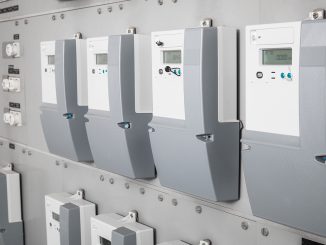
Information technology lies at the heart of sectoral improvement. Smart grids and smart meters, combined with distribution SCADA and energy audit systems, enable real-time theft detection, accurate demand forecasting, precise procurement and time-differentiated pricing, as well as demand response to address the intermittencies of renewable energy.
Pilot projects are critical for demonstrating viability. Greater entrepreneurship is needed, on the lines of the PLI scheme for solar and lithium-ion cells. India must look beyond lithium batteries towards flow batteries and other cost-effective storage technologies, leadin g global innovation rather than following it. State regulators should allow pilots as proof of concept, especially for long-duration energy storage.
In e-mobility, the upfront costs of EVs have dropped due to battery-as-a-service, enabling monthly payments. MG Motors has led adoption with Windsor EV, the top-selling model in India for 11 consecutive months, surpassing 20,000 units since late 2024. Other companies could replicate this success.
Finally, the limited uptake of the PM-KUSUM scheme calls for review. Business cases for its components must be revised to ensure greater adoption and impact.
Dr S.K. Chatterjee
The integration of large-scale intermittent renewable energy is now the sector’s biggest challenge. During solar hours, net load falls so low that thermal units with schedules below the technical minimum over-inject to remain on bar, thereby causing high-frequency risks. There are limited reserves for contingencies, and ramping requirements are high during evening peaks. This calls for a relook at grid operations and market design, including contracting structures, scheduling and despatch.
A resource adequacy framework is critical to ensure the right mix of resources, reserves, and flexible options such as storage and demand response. In my personal view, the contracting structure with self-despatch rights needs review. An energy-only market oblivious to generators’ operational constraints may not be adequate for handling renewable energy intermittency. There are suggestions for decoupling scheduling and despatch, where the discoms continue to have scheduling rights, but on day-ahead and real-time, the generators’ despatch is decided centrally, considering cost and operational constraints. This framework, apart from optimising short-run marginal cost, can bring the existing PPAs to the market and increase market depth.
Distribution remains the most stressed segment, with accumulated losses exceeding Rs 7,000 billion. The government, regulators, and discoms must work together to ensure cost-reflective tariffs, timely revisions, and performance improvements through optimal procurement and loss reduction.
Shyamasis Das
India’s growing solar capacity has skewed renewable generation towards midday hours, increasing the possibility of a “canyon-shaped” daily net demand profile. Net demand – total demand minus supply from variable renewables – may bottom out at noon but spike in the evening, pressuring coal plants to run at technical minimum and forcing solar power curtailment. With limited long-duration storage and weak demand flexibility, further renewable absorption remains constrained. Early signs are visible: on August 25, the Indian Energy Exchange real-time market recorded an average price of just Re 0.86 per kWh until 1630 hours, an unthinkable figure a few years ago.
Despite rapid renewable additions, grid emission intensity is not declining fast enough. The share of non-fossil-based electricity, including nuclear, reached 30 per cent by July 2025 (up from 25 per cent in 2024-25), yet solar’s contribution remained below 10 per cent, underscoring the limits of solar-driven decarbonisation. On the storage front, progress lags far behind targets. India’s National Electricity Plan requires 7.5 GW of pumped hydro and 34.7 GWh of BESS capacity by 2026-27, with requirements set to triple and grow sevenfold respectively by 2031-32. Slow commissioning has not yet hurt, as renewable capacity growth has not created surplus power, but faster renewable expansion is essential to build a viable storage market.
On the demand side, power consumption has risen faster than renewable generation over the past decade, except in 2020-21. Without curbing demand growth, coal reliance will deepen. The way forward includes accelerating renewables, scaling storage (BESS and pumped hydro), and shifting load from evening to daytime. Equally critical are efficiency measures, time-of-day tariffs, demand response and faster smart meter deployment, which is still sluggish despite their broad benefits beyond billing efficiency.
Somit Dasgupta
Assuming we remain committed to going net zero by 2070, our biggest challenge is adding renewable capacity at the scale that is required. While we are adding renewable capacity every year, the pace is too slow to meet our targets. At COP26 in 2021, we pledged to reach 500 GW of non-fossil capacity by 2030 but we are at only about 243 GW. To reach 500 GW, we had made a policy announcement to add 50 GW of renewable capacity each year for the next five years starting 2023-24. However, we only achieved 18 GW in 2023-24 and 28 GW in 2024-25. In the current financial year, we have added only 15 GW so far. Our yearly average for the past 10 years has been a paltry 11 GW. Clearly, we are behind the curve.
To address these issues, we need to remove barriers such as insisting on the Approved List of Models and Manufacturers and imposing basic customs duties. The state governments must also play a proactive role by facilitating land acquisition and ensuring timely payments to renewable generators. Finally, we need to build a robust transmission system, which will guarantee easy access to the grid for renewable generators. These suggestions are merely illustrative and by no means exhaustive.
Manoj Kumar Upadhyay
Several challenges limit the pace of power sector development. These include delays in land procurement, the slow pace of transmission expansion, delays in grid connectivity and supply chain constraints. It is urgent and possible to overcome these bottlenecks through continuous innovation in policy, bid designs and contracting structures for procurement and energy storage, market design reforms and other strategic interventions.
The financial health of discoms is still a major issue, primarily due to delays in the payment of government department dues and subsidies as well as the non-implementation of cost-reflective tariffs. Further, the rapid growth of renewable energy, EVs and consumer participation in energy markets is transforming the sector, but fragmented systems and the lack of seamless digital integration remain key barriers. To address these, the MoP is reimagining the sector’s digital foundation through the India Energy Stack – a digital public infrastructure that will provide a standardised, secure and open platform to manage, monitor and innovate across the electricity value chain.
What is your outlook for the sector in the near to medium term?
Pankaj Batra
India’s power sector is witnessing rapid transformation, with major initiatives under way for energy transition. In Ladakh, often called the “roof of the world”, the government is developing a 13 GW hybrid renewable energy park with solar, wind and 12 GWh of battery storage. Linked to Haryana via HVDC line under the Green Energy Corridor Phase II, it will also strengthen power supply in Ladakh and Jammu & Kashmir.
Gujarat’s Khavda Renewable Energy Park, spread over 538 square km, will be the world’s largest hybrid renewable park, targeting 30 GW by 2029. By August 2025, Adani Green Energy had commissioned 5,567.5 MW at the site, with NTPC Green Energy also contributing. Recognising nuclear energy’s role in energy security, India launched the Nuclear Energy Mission for Viksit Bharat. It targets 100 GW of nuclear capacity by 2047 (from 8.18 GW today), with Rs 200 billion allocated for small modular reactors (SMRs). NTPC aims to build 30 GW of these by 2047, through ventures with Nuclear Power Corporation of India (NPCIL) and its subsidiary NTPC Parmanu Urja Nigam Limited (NPUNL).
Energy storage is gaining momentum, with India’s pumped storage potential at 200 GW. The first 250 MW unit of a 1,000 MW variable speed plant at Tehri was commissioned in June 2025. In the offshore wind segment, SECI cancelled 4.5 GW of tenders due to poor response, but the Ministry of New and Renewable Energy (MNRE) has proposed Rs 67 billion VGF, with new Tamil Nadu bids expected in early 2026.
India is also building its Carbon Credit Trading Scheme, with a soft launch planned in 2026. Complementing this, PLI schemes worth Rs 240 billion for solar PV and Rs 181 billion for advanced battery storage aim to boost domestic manufacturing, cut imports and support clean energy growth. With such initiatives, the power sector is set for sustained progress.
Dr S.K. Chatterjee
The outlook for the sector is ambitious and transformative. Peak demand is projected to exceed 335-350 GW by 2030. Meeting this demand while decarbonising generation will define the sector’s trajectory. Solar and wind will remain key drivers, supported by hybrid and round-the-clock projects with storage. The expansion of domestic solar manufacturing under the PLI scheme will reduce import dependence and improve competitiveness.
Flexibility will be the key enabler, driven by flexible thermal generation, pumped storage and BESS. The CEA estimates that India will need over 400 GWh of storage by 2031-32. Transmission charge waivers, mandatory ESS in future solar tenders and the creation of an ancillary services market are expected to accelerate investments.
Distributed energy resources and digitalisation will reshape the power system. Rooftop solar, demand response and virtual power plants will turn consumers into prosumers. These changes will require new operating rules at both transmission and distribution levels. Digitalisation will also simplify electricity transactions and enable peer-to-peer trading, paving the way for a digital energy grid. The power sector holds considerable promise in the years ahead, underscoring the need for all stakeholders to work in unison towards common goals.
Shyamasis Das
As India continues to add renewable power capacity, which is likely to remain solar-heavy, the momentum for scaling up energy storage capacity is expected to grow. More utilities are expected to jump on the bandwagon, with sizeable BESS applications both on the generation side to support the transmission system and in the electricity distribution segment. Uptake in the rooftop solar segment, however, may remain limited due to unfavourable cost economics.
Unless serious effort is made to manage power demand, consumption will continue to outpace renewable generation. Rising cooling demand driven by rising temperatures will further increase power demand in the coming years. The electrification of various energy end-uses such as transport will add to overall demand. EVs, in particular, are poised to emerge as noteworthy electricity consumers for discoms. There are concerns that evening time EV charging could increase peak demand. Meanwhile, subsidised electricity rates offered to EV charging may add to the financial woes of discoms unless tariffs are made cost-reflective immediately. Currently, half of the 24 states that have introduced separate tariffs for EV charging are currently offering preferential rates (lower than the cost of supply).
Somit Dasgupta
There is no denying that we have to meet our demand, come what may. If we are finding it difficult to add renewable capacity at the required pace, we will have no option but to pursue coal. Of course, this will jeopardise our commitment to achieve net zero by 2070. At the same time, it is important to recognise that climate change cannot be handled by a few select countries working towards decarbonisation. Let us not forget that the world’s largest cumulative polluter, the US, walked out of the Paris Agreement. Thus, in the near to medium term, India may have no option but to continue relying on coal for power generation, at least for the next two decades, if not longer.
Manoj Kumar Upadhyay
The National Electricity Plan (NEP) outlines India’s power expansion strategy for the next decade. Key targets include: peak demand forecast of 277.2 GW by 2026-27 and 366.4 GW by 2031-32; installed capacity target of 609 GW by 2031-32; renewable energy goal of 500 GW of non-fossil fuel capacity by 2030; and an investment requirement of Rs 33.6 trillion ($384.5 billion) over the next decade. While renewables remain central to the NEP, coal-based capacity is expected to increase by 80 GW by 2031-32 to ensure stable baseload power.
Based on several projections by think tanks, India’s power sector is set for significant expansion by 2047, reaching a demand of 708 GW and a target capacity of 2,100 GW, primarily driven by a massive increase in renewable energy (1,200 GW of solar and 400+ GW of wind) and substantial growth in energy storage (116 GW pumped hydro). This shift will be accompanied by the modernisation of thermal power through advanced technologies such as advanced ultra supercritical technology and carbon capture, utilisation and storage, a major scale-up of nuclear power to reach 100 GW, and the integration of artificial intelligence and machine learning for efficiency and safety.
(Dr S.K. Chatterjee’s views presented above are his personal views.)