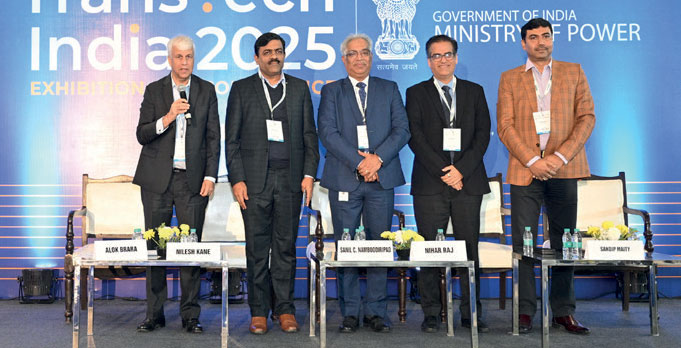
The session on “O&M Best Practices” comprised a panel discussion among Dr Nilesh Kane, Chief (Transmission & Mumbai Distribution), Tata Power; Sandip Maity, Senior Vice-President, Design and Engineering, Resonia; Sanil Namboodiripad, Chief Operating Officer, IndiGrid; and Nihar Raj, Head, O&M, Adani Energy Solutions. The panellists discussed the key trends, challenges and emerging practices in transmission operations and maintenance (O&M). Edited excerpts….
Key challenges
The close proximity of generation, transmission and distribution systems in urban areas has led to a rapid rise in faults, complicating system operations. Transient faults, encroachments around tower locations and increasing clearance requirements due to multi-storey constructions have intensified safety risks. Underground transmission infrastructure comes with its own challenges. Extensive construction activity and recurring faults further affect system reliability. In the Northeast, difficult terrain and river crossings affect tower foundations and stability. In Jammu & Kashmir, harsh winters restrict field activities for four to five months each year, requiring preventive maintenance to be completed within a limited window, using specialised equipment and region-specific techniques.
Floods in the northern and north-eastern regions and landslides in hill states pose significant risks, including conductor and tower failures. Strengthening availability, reliability and climate resilience has, therefore, become a priority, requiring continuous risk assessment.
Transmission assets located in coastal or high-rainfall regions face challenges arising from severe soil erosion, river meandering and accelerated deterioration of foundations. Polymer insulators in these geographies are vulnerable and require systematic upgradation. Moreover, frequent switching operations due to grid compensation requirements are putting stress on equipment, leading to deterioration well before the 30–35-year lifecycle. Revisions in seismic zoning norms have further necessitated reassessment and modernisation of assets in newly classified high-risk zones.
Emerging practices
Digitalisation has emerged as a critical enabler of modern O&M activity across utilities. Digital platforms, drones and robotics are increasingly being used to improve safety, efficiency and decision-making. Drones support commissioning and inspection activities, while robotics are being deployed for asset condition and performance tracking. Asset health cards are being adopted to consolidate dissolved gas analysis results, lightning arrester leakage current data and residual life calculations. These inputs are integrated into centralised platforms supporting risk-based and opportunity-based zero-breakdown maintenance. Meanwhile, dynamic load studies, numerical relay-based feeder monitoring, thermal imaging in air-insulated substations and ultrasound-based diagnostics are strengthening proactive maintenance strategies.
The way forward
India’s transmission sector is entering a new phase, marked by large-scale grid expansion and rapid digitalisation. Regions such as desert corridors, wind-intensive zones and renewable energy hubs are experiencing heightened exposure to extreme winds, lightning and transient faults, reinforcing the need for predictive maintenance and robust resilience frameworks.
Digitalisation is redefining asset management practices, with a growing emphasis on workforce upskilling, workflow redesign and field-level adoption. As utilities move towards remote operations and leaner on-site staffing models, cybersecurity has become critical to ensure secure and reliable connectivity between field assets and central control centres. Integrated asset performance management approaches that combine historical asset data with real-time operational information are helping optimise maintenance planning. Climate-focused risk management, including analysis of weather patterns and fault correlations, is enabling targeted interventions and measurable improvements in transmission line availability.
Digital tools such as mobile applications for real-time patrolling, dashboards for decentralised decision-making and IoT sensors for continuous equipment monitoring are strengthening field operations. AI is expected to play a central role in future O&M strategies. Overall, transmission O&M is moving decisively towards data-driven, technology-enabled and climate-resilient frameworks to meet the evolving demands of the country’s power system.