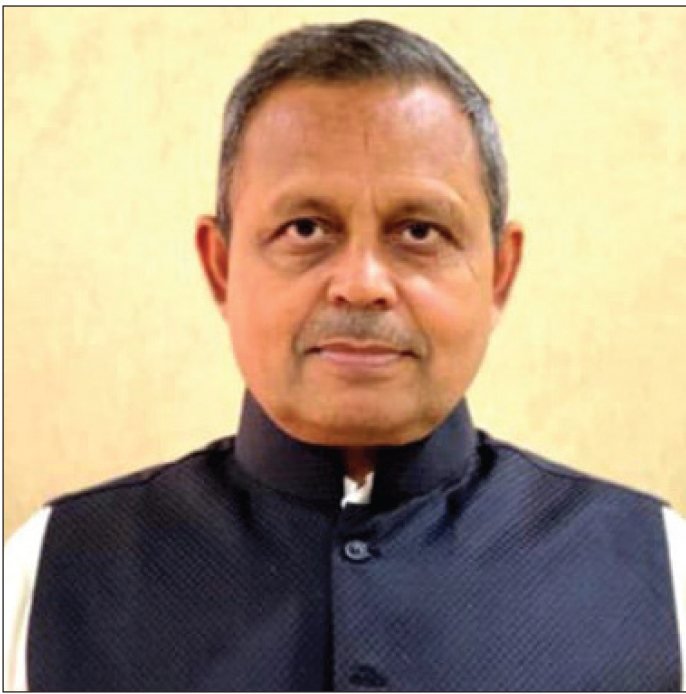
 The Madhya Pradesh Power Transmission Company (MP Transco) was established in 2002 after separating the transmission activities from the erstwhile Madhya Pradesh State Electricity Board. In this exclusive conversation, Sunil Tiwari, Managing Director, MP Transco, who has over four decades of experience in the state’s power sector, shared insights on the state’s transmission system, achievements and future plans.
How extensive is the company’s current transmission network?
The size and capacity of MP Transco have been continuously growing. At present, the company operates an extensive network of about 42,520 ckt km of extra high-tension (EHT) lines and 417 EHT substations with a total transformation capacity of approximately 82,101 MVA. In addition, 20 substations are operating under the tariff-based competitive bidding (TBCB) mode with a combined capacity of 4,056 MVA. When consolidated, Madhya Pradesh has 437 EHT substations with a total transformation capacity of 86,157 MVA, and electricity transmission is carried out through 44,850 ckt km of EHT lines across the state.
How do you view MP Transco’s achievements over the years?
MP Transco has remarkably reduced transmission losses within the state, limiting them to a historic low level of 2.6 per cent, whereas in 2002-03, the figure was 7.93 per cent. This transmission loss is significantly lower than the target of 2.77 per cent prescribed by the state electricity regulatory commission (SERC). During this period, the state’s peak power demand increased nearly fourfold. Similarly, the transmission availability for 2024-25 was 99.47 per cent, which is far superior to the SERC’s benchmark of 98 per cent. Today, the company’s network is fully capable of meeting the state’s entire demand reliably and efficiently.
What major reforms led to this national-level achievement?
These improvements are the result of planned and preventive maintenance, wider use of hotline maintenance technology, effective deployment of the emergency restoration system during contingencies and regular testing of equipment. Additionally, by efficiently using drones for transmission tower patrolling, we have successfully reduced tower breakdowns by up to 35 per cent across the state. Continuous innovation, automation and regular training of personnel have brought qualitative improvements in efficiency across the organisation.
What advantages has the company gained from using the supervisory control and data acquisition (SCADA) system?
Madhya Pradesh is the first state in India to implement the transco SCADA system. Three SCADA centres operate across the geographical areas of the three discoms, with the Jabalpur SCADA Centre functioning as the State Control Centre.
Through this system, the entire transmission network is monitored in real time. All 417 EHT substations are connected to SCADA, and no new substation is charged until it is linked with the system. This has eliminated manual data entry, enabled precise equipment quality monitoring and ensured that tripping or fault notifications are instantly shared via SMS, leading to significant improvement in system reliability and availability.
What inspired MP Transco to launch the Bird Safety Programme? What technologies have been implemented to protect birds? What impact has the initiative shown, and what is next?
Our transmission network passes through forests, wetlands and migratory routes, where large birds like the Sarus Crane, Painted Stork and Great Indian Bustard are at risk of electrocution or collision. Balancing power infrastructure with ecology is our responsibility. This programme aims to ensure safe coexistence between technology and wildlife.
We have introduced three key devices across vulnerable EHT corridors, namely Bird Guards to prevent perching and contact with live wires; Preventers as insulating rings on insulators; and Flappers with reflective radium coating to make lines visible even at night. So far, over 1,000 ckt km have been equipped with 153,000 Bird Guards, 4,983 Preventers and 4,705 Flappers.
Early results are encouraging – bird strike incidents and power faults have both declined. We are now planning real-time monitoring, along with training and awareness programmes for our staff and local communities. Our goal is a transmission network that is both technologically advanced and ecologically responsible – a model for sustainable power infrastructure in India.
Is the e-tendering policy implemented in the transmission company?
Yes, the e-tendering system is fully implemented in MP Transco. This has enhanced transparency, credibility and competition, maintaining an effective balance between quality and cost.
What facilities have been extended to vendors?
MP Power Transmission Company makes vendor payments through enterprise resource planning and digital MB systems, ensuring that vendors need not visit any company office in Madhya Pradesh for payment processing.
Is MP Transco progressing toward developing a 765 kV network?
Madhya Pradesh, located at the heart of India, is already connected to the national grid through seven 765 kV substations at Bhopal, Indore, Gwalior, Bina, Satna, Seoni and Jabalpur. Currently, there is no significant internal demand within the state that necessitates developing an internal 765 kV network.
What are the plans for private sector participation?
Under the TBCB model, 35 substations of 400 kV, 220 kV and 132 kV, along with associated transmission lines, are being developed across the state.
What have been the company’s notable achievements in recent years?
- MP Transco’s state load despatch centre (SLDC), equipped with world-class facilities, holds a distinct position in the country.
- It was the first load despatch centre in India to develop a cybersecurity model, now being replicated by other SLDCs nationwide.
- In 2024-25, the company achieved a new record in energy handling, marking a 6.2 per cent increase over the previous year, handling 101,039.88 MUs of energy.
- The transco won the National Operational Excellence Award for the innovative deployment of drones in transmission tower patrolling.
- The transco achieved a 35 per cent reduction in tower breakdowns through drone-based patrolling.
- The company enabled fully digital vendor and contractor payments through the digital MB system.
- The transco recorded transmission losses at 2.60 per cent in FY 2024-25, lower than SERC’s target of 2.77 per cent, achieving lowest-ever loss level.
- The transco achieved a maximum transmission system availability of 99.47 per cent, surpassing the SERC’s benchmark of 98 per cent.
- The company implemented advanced photo technology to strengthen substation automation and tele-protection systems.
- The transco commissioned the state’s third gas insulated substation (GIS) at Gwalior.
- The transco upgraded the SCADA system with indigenous equipment and technology in line with central power system guidelines.
- The transco added 456 km of new circuit lines, commissioned 46 power transformers and achieved transformation capacity exceeding 80,000 MVA in FY 2024-25.
What new technological advancements has the company implemented?
We have developed three GIS substations in Bhopal, Indore and Gwalior. To enhance line capacity, high-temperature low-sag conductors and multi-circuit monopole towers are being used. For the Indore and Bhopal Metro projects, we built composite transmission lines that combine traditional towers, monopole towers, narrow-base towers and EHT underground cables. Additionally, the first phase of remote operation of old substations in Jabalpur, Bhopal and Indore has been completed. In line with the Central Electricity Authority’s guidelines, we have upgraded the SCADA system using indigenous equipment and technology. We have also successfully applied advanced optical fibre technology to strengthen substation automation and teleprotection. All EHT substations in the state are connected via a reliable optical ground wire-based communication system, enabling advanced systems like real-time energy management and phasor measurement units to enhance transmission security.
What are the company’s major priorities for the future?
Our top priorities include maintaining the stability and reliability of the transmission network, ensuring a zero-accident policy, and executing all construction and maintenance works with the highest quality standards. At present, transmission arrangements for Ujjain’s Simhastha-2028 are among our highest priorities.
What steps has MP Transco taken for the welfare of outsourced employees?
MP Transco considers outsourced personnel as an integral part of the organisation. The company has provided 3,878 Ayushman cards and 3,724 ESIC cards to eligible employees, ensuring social security. Regular monitoring ensures timely salary payments, and outsourced workers are given equal participation in the company’s sports and cultural programs.
What initiatives have been taken for maintenance personnel?
The risk allowance for maintenance staff has been doubled. The ex gratia amount to the dependent family in case of an employee’s death has been increased to Rs 125,000. We have also eased bond conditions for hotline-trained personnel selected in inter-company transfers. In addition, CPR life-saving techniques and health training camps are regularly conducted at TLM headquarters and substations, including eye check-ups for outsourced staff and drivers.