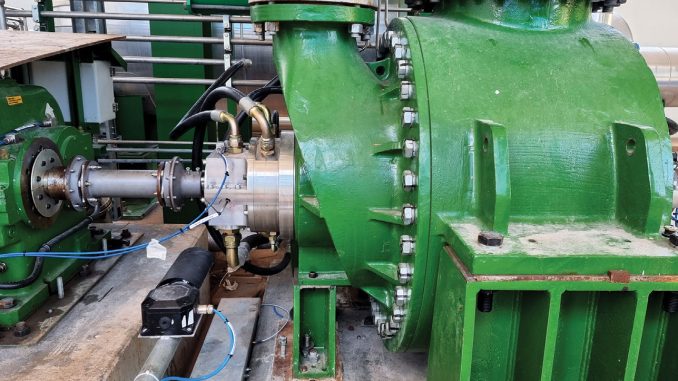
Over the years, the boiler, turbine and generator (BTG) segment has gained traction owing to the push towards energy security and a diversified generation mix. Most power generation facilities use advanced turbine technology to reduce fuel usage and lower operating expenses. These systems help maintain an optimum energy flow. Consequently, optimal BTG operations are critical for safe, reliable, economic and robust functioning of power generation infrastructure. A look at the key trends and demand drivers in the BTG industry…
Market overview
As per the Central Electricity Authority (CEA), as of November 2025, the installed generation capacity in India stood at 509.74 GW. The fuel mix comprises 48.44 per cent of thermal energy and 1.72 per cent of nuclear energy, with BTG playing a significant role in this energy generation infrastructure. The pursuit of energy security and policies promoting cleaner thermal technology are driving market growth, with India at the forefront due to rapid economic expansion and significant investments in power infrastructure, which are expected to propel the BTG market in the future.
Demand drivers
The electricity sector is undergoing a transformative shift towards clean energy adoption driven by environmental concerns. The objective of achieving 500 GW of non-fossil fuel capacity by 2030 is expected to influence the proportion of fossil fuel generation capacity in India. Thermal power plants (TPPs) have functioned as baseload facilities for many years, necessitating their revamp. Consequently, the flexibilisation of TPPs has become essential for the integration of renewable energy. The CEA’s strategy for attaining a 40 per cent technical minimum load is expected to affect the functioning of conventional generation facilities and may result in their operation at a reduced capacity or part load. As a result, thermal generation units must be calibrated to effectively and efficiently satisfy the new load demands.
Flexible operation is detrimental for TPPs as it increases the creep-fatigue damage that is induced by thermal strains. Creep-fatigue failure is the most common type of failure in thermal power plant components. A significant number of BTG components are prone to damage, with the severity ranging from severe to mild. Hence, it becomes necessary to reconsider the maintenance methods, enhance inspection schedules and ensure that BTGs function in a seamless manner.
Several TPPs are currently not functioning at their optimal capacity, and a have exceeded their intended operational lifespan. The maintenance and repair of such units is crucial for enhancing performance and adhering to stringent environmental regulations. Renovation and modernisation (R&M) represents a more economical alternative to establishing a new facility. The government has recommended that utilities delay retirement until at least 2030, making R&M a critical strategy for generation companies to improve power output at ageing TPPs and prolong their operational lifespan. Hence, R&M is expected to drive the adoption of equipment such as BTGs in the coming years.
As per the National Electricity Plan (NEP) (Generation), by 2031-32, thermal generation capacity is expected to reach 284.4 GW, comprising 259.6 GW of coal and lignite and 24.8 GW of gas. Nuclear energy capacity is expected to reach 19.7 GW, hydro 62.2 GW, small hydro 5.4 GW, pumped storage 26.7 GW and biomass 15.5 GW. Further, under-construction capacity includes 26.9 GW of coal-based power plants, 11.4 GW of hydro, 8.7 GW of nuclear, 4.8 GW of biomass, 2.7 GW of pumped storage and 0.602 GW of small hydro, all envisaged for completion by 2031-32. Taking cognisance of the scale of upcoming energy generation capacities, the BTG market is expected to grow in the near future.
In June 2025, Bharat Heavy Electricals Limited (BHEL) received a letter of intent (LoI) from Adani Power Limited for the production and supply of six turbines for an 800 MW TPP. Likewise, in September 2025, BHEL received an LoI from MB Power Limited to supply the BTG for its upcoming 800 MW Anuppur TPP in Madhya Pradesh. The order for the BTG is also expected to accelerate the growth of the BTG industry.
Peak demand in the summer of 2025 necessitated the mandatory operationalisation of gas power plants. The Ministry of Power ordered an entire gas-based power fleet in the country to remain operational from May 26, 2025 to June 30, 2025. This was to ensure the continuous supply of electricity especially during high temperatures and peak demand. A notification of a similar nature mandated that power facilities that rely on imported coal must operate at full capacity until June 30, 2025. Such instances highlight the critical role of thermal energy generation in India. The emergence of new thermal energy generators and maintenance of the existing fleets are expected to benefit the BTG market as well.
Nuclear power is another rising segment for BTG equipment providers, amid the nation’s efforts to enhance the portion of non-fossil-fuel-based energy sources in the overall production mix. About 13.6 GW of nuclear energy capacity is under development. A total budgetary support of Rs 200 billion has been provided for the design, development and deployment of small modular reactors (SMRs) as part of the Nuclear Energy Mission. The aim is to create and operate at least five SMRs that are designed entirely by India by 2033. This includes the installation of a 200 MW Bharat Small Modular Reactor (BSMR-200) and 55 MW small modular reactor (SMR-55) in Tarapur, Maharashtra.
Further, in December 2025, Parliament passed the Sustainable Harnessing and Advancement of Nuclear Energy for Transforming India Bill, 2025, to enable private sector participation in the nuclear energy ecosystem. The bill, soon to become an act, intends to strengthen nuclear energy technology and support achieving 100 GW of nuclear energy capacity by 2047. The development of such a framework will likely benefit the BTG market in the long term.
 Emissions control
Emissions control mechanisms in thermal/nuclear energy generation are closely linked to the utilisation of BTGs. Ultra-supercritical and supercritical units achieve higher efficiencies (5-9 per cent over subcritical 500 MW units) in elevated steam parameters, thus reducing coal usage and greenhouse gas emissions per unit. The use of ultra-supercritical or supercritical technology in larger units with capacities ranging from 660 MW to 800 MW not only accelerates capacity addition, but also lower environment impact by reducing carbon dioxide and sulphur oxide emissions for each unit of electricity that is generated.
In addition to the reduction in coal consumption, the increase in efficiency is likely to reduce ash production. Similarly, the land required for ash dump sites would also decrease, along with a reduction in the amount of auxiliary power that is consumed. As per the CEA, as of November 2025, a total of 26 supercritical/ultra-supercritical projects with a capacity of 35.5 GW were at the under-construction stage. Further, as of September 2025, 101 supercritical and ultra-supercritical thermal units aggregating 70.19 GW were commissioned.
Issues and challenges
The growth of the BTG market is directly connected to the dynamics of the thermal power industry; however, the thermal industry has been experiencing sluggish growth over the past few years, due to dwindling capacity additions and low plant load factors (PLFs). Coal-based capacity addition between April and October 2025 stood at 5,060 MW, while in FY 2025 and FY 2024, it was 3,875 MW and 6,168 MW, respectively. Thermal PLF from April to November 2025 stood at 62.68 per cent, compared to around 68.44 per cent in 2023.
Further, the BTG industry is facing challenges due to the prioritisation of renewable energy targets, such as achieving 500 GW of non-fossil capacity by 2030, which has lowered the competitiveness of TPPs and gradually reduced the demand for new coal-based BTG installations.
Stricter emission regulations have also escalated capex and opex by 20-30 per cent, making greenfield thermal projects less competitive compared to cheaper solar, wind and storage alternatives. In the future, coal-fired units will play a significant part in greening India’s grid by providing flexible energy generation. Further, operations and maintenance strategies and R&M of thermal/nuclear power plants, are likely to gain traction.