Over the past few decades, India has seen significant growth in power generation capacity and a steady expansion of its transmission network. Alongside these developments, the distribution segment has continued to play a crucial role in delivering reliable and affordable electricity to end-consumers.
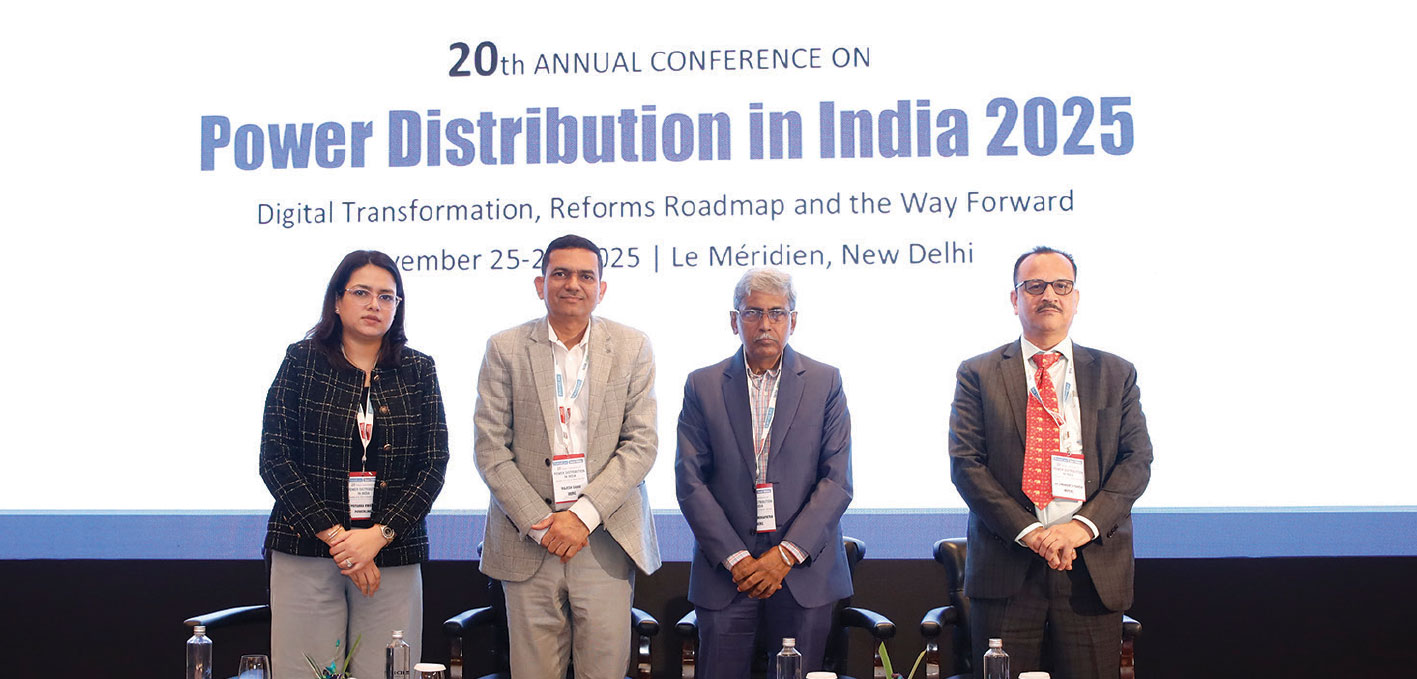
In the session “Regulators’ Perspective” at Power Line’s recent “Power Distribution in India” conference, regulators discussed the current state of the distribution sector, recent developments, key issues and their top priorities going forward. The panellists included Rajesh Dangi, Secretary, Delhi Electricity Regulatory Commission; Dr Umakanta Panda, Commission Secretary, Madhya Pradesh Electricity Regulatory Commission; and S.K. Ray Mohapatra, Member, Odisha Electricity Regulatory Commission. Edited excerpts…
Focus on the distribution segment
The panellists highlighted that the distribution segment has long been a key area of policy focus. However, over the years, distribution networks have expanded without adequate planning or systematic investment, leaving many utilities grappling with legacy infrastructure. As a result, persistent challenges such as high technical losses, poor service quality, safety risks and widespread consumer dissatisfaction have accumulated over time. These issues cannot be resolved through short-term fixes. Adding to the complexity, the distribution sector remains a monopoly in most parts of the country. This leaves consumers with no choice of supplier and dependent entirely on the incumbent licensee, regardless of service quality.
Given this scenario, regulatory oversight becomes crucial to ensure efficiency, accountability and consumer protection.
Privatisation of discoms
Privatisation of discoms has emerged as a key reform to tackle the long-standing weaknesses of the distribution sector. The main objectives of introducing private participation have been to reduce technical and commercial losses, enhance consumer service and satisfaction, ensure planned and systematic capital investment and bring in professional management practices.
Privatisation is expected to yield improvement in the discoms’ financial health. The panellists noted that privatised utilities have been able to clear outstanding dues to generators, make timely payments and even avail rebates for prompt settlement. Commercial performance has improved, with aggregate losses declining sharply. Power outages have also become less frequent over the past decade. Many of these early gains were achieved through a strong emphasis on metering, billing and collection efficiency.
At the same time, the panellists highlighted that reducing technical losses remains a major challenge even after privatisation. Distribution networks have expanded in an unplanned and unsystematic manner over many years, making network correction and stabilisation technically difficult. Addressing these legacy issues requires sustained capital investment and time. Further, the recent policy proposals introducing new models of privatisation, where multiple licensees can supply power through their own or shared networks, have also drawn regulatory attention. While increased competition is welcome in principle, sudden changes to the legal or operational framework raise questions about how these new provisions can be integrated, particularly in states where distribution has already been privatised under specific vesting orders.
Key issues and concerns
Despite reforms and privatisation, the distribution sector continues to face several persistent challenges. A major concern is that, in practice, distribution largely remains a monopoly. Although the law allows for parallel licensing, only a few applications have been received. Additionally, one licensee is still required to function as the universal service obligation provider, supplying electricity to all consumer categories, including rural and low-paying consumers. Supplying power exclusively to domestic consumers is generally unattractive due to high infrastructure costs and low profit margins.
Another issue is the prevalence of short tenures in key leadership positions at regulatory commissions. This hampers the development and implementation of long-term reforms. Regulators stress that continuity in leadership for reasonable tenures is crucial to drive reforms, enforce accountability and prevent policy drift. Short tenures often delay critical decisions, particularly on sensitive issues such as tariff rationalisation. This ultimately increases the costs for consumers through the accumulation of regulatory assets, which are created because tariffs are not increased in a timely and gradual manner.
Further, in states with low consumer density and a predominantly rural population, only a small fraction of consumers generate surplus revenue. This means that a small fraction of consumers effectively subsidises the remaining consumer base, limiting the scope for cross-subsidy and placing additional financial pressure on distribution licensees. Another major issue relates to billing complaints. Disputes related to smart meters and dissatisfaction with service quality are frequently discussed in the Consumer Grievance Redressal Forum meetings. Gaps in billing cycles can result in accumulated bills that appear unexpectedly high and erode consumer trust.
Additionally, despite significant capital expenditure and multiple safety initiatives by discoms, incidents of electrocution continue to occur. The panellists noted that safety outcomes have not improved proportionate to the investments made, necessitating closer attention.
Data quality and reporting practices were also flagged as key issues. Inconsistencies in reporting aggregate technical and commercial (AT&C) losses and collection efficiency were highlighted. For example, collection efficiency figures can sometimes exceed 100 per cent when arrears from previous years are included in the current-year data. Such practices distort the actual performance picture and complicate regulatory assessment. Similarly, reliability metrics such as system average interruption duration index (SAIDI) and system average interruption frequency index (SAIFI) can be misleading when monitoring is limited to feeder-level data. In such cases, supply may appear available at the sending end, while consumers at the tail end continue to face outages due to long line lengths.
Current measures being taken
The panellists highlighted several regulatory and operational measures aimed at addressing key concerns. A key approach has been the setting of explicit loss reduction targets over multiyear periods, along with clearly defined performance standards and penalties for non-compliance. Compliance data is increasingly being captured through online portals, with automated collection from discom servers via APIs. This ensures that data flows directly from discom systems, reducing manual intervention, errors and potential manipulation.
To address the accumulation of regulatory assets, aggregate revenue requirement filings are now subjected to detailed scrutiny, with rigorous follow-ups and multiple meetings before tariffs are finalised. Notably, technology is increasingly playing a central role in both regulation and utility operations. The panellists discussed the adoption of automation, digital systems and regulatory analytics tools to enhance data analysis and streamline regulatory processes. For instance, the Madhya Pradesh Electricity Regulatory Commission is developing an AI-based regulatory analytics tool to assist state regulators in drafting orders and regulations. This system automatically tracks and summarises regulations framed by electricity regulatory commissions across the country, accelerating the process of framing orders and regulations.
On the utility side, discoms have stepped up technology adoption after privatisation. Centralised control centres and SCADA-enabled substations are being deployed, enabling remote monitoring, improved network visibility and faster response to network events.
The way forward
Looking ahead, the panellists identified financial sustainability as the top priority for the distribution sector. States are focusing on reducing accumulated regulatory assets, which, under Supreme Court directives, must be liquidated over a seven-year period. The pace and impact of this will vary across discoms. To recover these amounts, regulators may consider higher regulatory surcharges or tariff adjustments, as existing surcharges have not been sufficient to ensure full recovery. Another option discussed was direct government support in the form of bailouts to ease the financial burden on consumers.
Improving data quality and transparency is another priority. The panellists emphasised the need for end-to-end visibility across distribution networks, enabled by smart metering and system-level monitoring. They stressed that discoms must clearly segregate current-year collections from past arrears to provide an accurate picture of collection efficiency and AT&C losses, thereby preventing distortions in regulatory reporting.
Demand growth was highlighted as an important factor for meeting revenue requirements and maintaining tariff stability. In some states, reductions in domestic tariffs were made possible because industrial consumption performed well and supported overall revenue. This underscored the importance of increasing demand, as only through sustained growth can tariffs remain stable without placing undue burden on domestic consumers.
In sum, to stabilise the distribution sector, regulators identified several priority measures such as timely tariff action, liquidation of regulatory assets and improved data transparency. Concentrated focus on these areas is essential not only for strengthening discom finances but also for ensuring tariff stability and reliable service for consumers.