India is rapidly advancing its domestic clean energy transition while simultaneously strengthening international partnerships. This reflects a deliberate strategy to make energy cooperation a core part of its economic and geopolitical agenda. This approach is reinforcing India’s position as a clean energy leader, particularly in the Global South.
Against this backdrop, this article examines India’s evolving global partnerships in the energy sector, focusing on cross-border electricity trade expansion, its stance at recent the Conference of the Parties (COP) summits, cooperation on critical minerals and engagement with the International Solar Alliance (ISA)…
Expanding cross-border energy supply
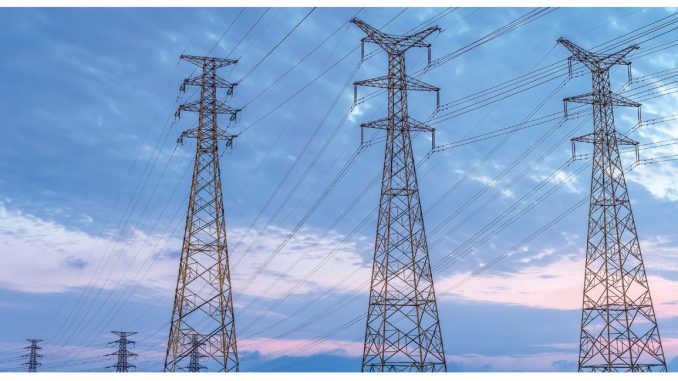
According to Central Transmission Utility of India Limited’s Inter-State Transmission System Rolling Plan 2030–31 (Interim Report), India’s cross-border transmission network now connects its national grid with Nepal, Bhutan, Bangladesh and Myanmar through a mix of synchronous and asynchronous links at 11 kV, 33 kV, 132 kV and 400 kV levels. These interconnections form the backbone of regional electricity trade in South Asia.
As per the Table, the country’s installed cross-border transmission capacity with Bangladesh, Bhutan, Nepal and Myanmar stands at 10,323 MW as of September 2025. Bhutan accounts for the largest share at 7,560 MW, largely reflecting long-standing hydro-based power trade; followed by Nepal at 1,600 MW and Bangladesh at 1,160 MW. The interconnection with Myanmar is currently modest at 3 MW. Together, these links form the foundation of India’s regional electricity exchange framework in South Asia. In addition, 8,100 MW of cross-border transmission capacity is currently under construction along the India–Nepal corridor. Looking ahead to 2030–31, a further 7,354 MW of capacity is planned, including 5,350 MW with Nepal, 1,000 MW with Bangladesh, 504 MW with Myanmar and 500 MW through a proposed interconnection with Sri Lanka.
Given its central geographic location in South Asia, India is well positioned to facilitate electricity exchange in the region. Through these expanding transmission links, it is gradually shaping a regional electricity market in the area. By promoting infrastructure connectivity, affordable power trade and renewable integration, India is strengthening its position as an important energy partner in the Global South.
India’s stance at COPs on equity, finance and just transition
India has been a proactive participant at COP summits over the years, consistently shaping discussions around equity, climate finance and sustainable development. At COP21 held in Paris in 2015, India submitted its first nationally determined contribution (NDC) targets and co-launched the ISA with France to promote solar energy globally. At COP26 in Glasgow in 2021, the country updated its NDC targets and announced the Panchamrit commitments. In June 2025, it fulfilled one of these commitments and achieved the milestone of 50 per cent non-fossil fuel-based installed power capacity, five years ahead of the 2030 target.
Furthermore, it has led discussions on climate finance. which remains one of the most contentious issues between developed and developing countries at the COPs. At the last two COPs, COP30 and COP29, India, on behalf of the like-minded developing countries bloc, pushed for higher climate finance commitments from developed countries. COP29 concluded with the adoption of the Baku Finance Goal, which commits developed nations to mobilise $300 billion annually by 2035 and sets a long-term commitment of $1.3 trillion in climate finance for developing countries. However, India rejected the deal, calling it inadequate and inequitable, as it fell short of the $1.3 trillion annual target by 2030 sought by developing nations, amounting to less than one-fourth of the target. At COP30, India reiterated that the burden of climate mitigation must not shift to those least responsible for causing the crisis. It stressed the need for greater financial and technological support for vulnerable populations, particularly in the Global South, and reaffirmed its commitment to science-based, equitable and rules-based climate action that respects national sovereignty.
 Collaborations with ISA for solar diplomacy and global grid integration
India has contributed politically, diplomatically and institutionally to the ISA’s establishment by providing early seed support and driving its agenda on cost reduction, demand aggregation, technology adoption and capacity building for solar energy. Through the ISA platform, India has helped mobilise support for enabling environments for solar project financing, promoted technology transfer, and enhanced skill development for member countries.
The alliance now includes over 120 signatory and member countries and aims to mobilise more than $1 trillion in solar investments by 2030 to deploy 1,000 GW of solar energy capacity globally, thereby strengthening energy access, energy security and affordable clean transitions worldwide. Complementing its role in the ISA, India has also advanced the visionary One Sun-One World-One Grid (OSOWOG) initiative. OSOWOG envisions a globally interconnected electricity grid through which solar power generated in one region can be transmitted to another, ensuring round-the-clock access to clean energy across time zones.
Building on this vision, India also partnered with the UK to align OSOWOG with the UK-led Green Grids Initiative, culminating in the launch of the Green Grids Initiative — OSOWOG (GGI–OSOWOG) at the COP26 climate summit in Glasgow in November 2021, with support from the ISA and the World Bank. In addition, India is looking to collaborate with Saudi Arabia and the UAE on a cross-border energy exchange project involving subsea power cables to facilitate electricity trade. This initiative would enable electricity supply between the countries as required, further strengthening regional energy cooperation.
Collaborations on critical minerals
India is in discussions with various countries, including Australia, Brazil, Canada, France and the Netherlands, to forge partnerships for the joint exploration, extraction, processing and recycling of critical minerals. India recognises the importance of critical minerals as key inputs for solar cells and battery energy storage systems. Securing partnerships in this area is therefore a strategic step to strengthen supply chains of such inputs.
In 2022, the AU Critical Minerals Office and Khanji Bidesh India Limited signed an MoU to undertake joint due diligence for the selection of lithium and cobalt projects in Australia for investment and sourcing these minerals to India. More recently, in November 2025, India, Australia and Canada entered into the Australia-Canada-India Technology and Innovation Partnership. The partnership will focus on advancing green energy innovation and building resilient supply chains, including those for critical minerals.
Key global partnerships on biofuels and offshore wind
India is also forging partnerships in emerging renewable energy segments. In this regard, it launched the Global Biofuels Alliance, along with leaders from the US, Brazil, Italy, Argentina, Singapore, Bangladesh and Mauritius. The alliance now comprises 33 countries and 14 international organisations, and seeks to position biofuels as a key solution in the global energy transition while contributing to socio-economic growth. India has also deepened cooperation with Denmark in the offshore wind sector. The Centre of Excellence for Offshore Wind and Renewable Energy was established as a joint initiative between India’s Ministry of New and Renewable Energy and the Danish Energy Agency. This collaboration aims to bring together industry, public authorities and civil society to facilitate and accelerate the implementation of India’s offshore wind strategy.
Outlook
India is emerging as a key destination for global investments in the clean energy space. According to a Rajya Sabha response dated August 19, 2025, the country received foreign direct investment of $12,674 million in the renewable energy sector between April 2020 and March 2025. Major renewable energy players in India have also secured investments from global pension funds and sovereign wealth funds.
India’s domestic delivery, cross-border engagement, and multilateral climate participation provide it with both operational experience and diplomatic advantage. Its ability to scale up renewable capacity while maintaining grid stability and expanding regional cooperation reinforces its position as an important voice of the Global South in shaping the future energy order.
Nidhi Dua