
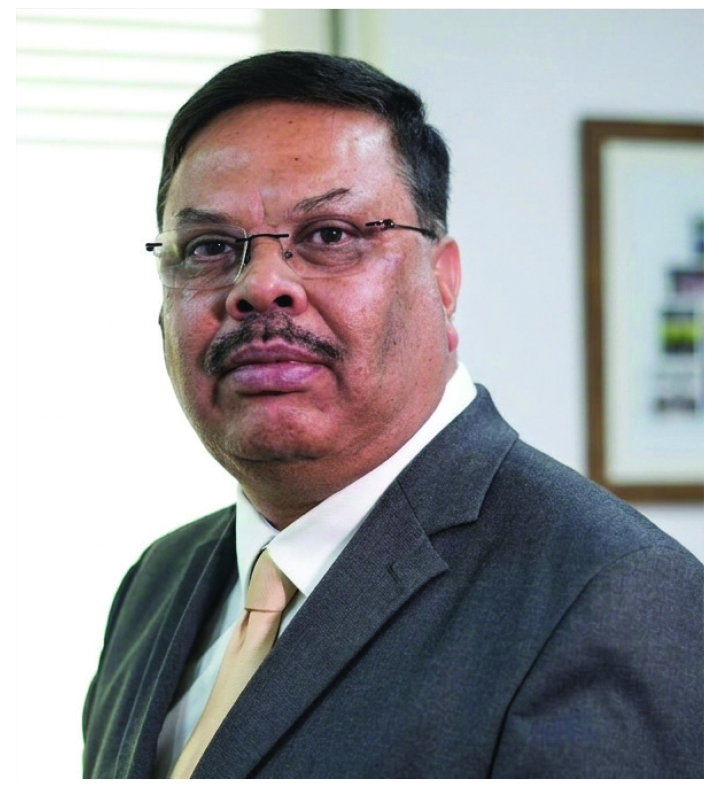
 In a recent interview with Power Line, G. Ravindra, Regional Executive – Asia, and Managing Director and Chief Executive Officer, ANDRITZ Hydro Private Limited, discussed the growing importance of hydropower and pumped storage projects (PSPs) in India, the key initiatives in this space, the company’s expansion plans to meet market demand, and its priorities for the future. Edited excerpts…
What are the bright spots in India’s hydropower sector?
India’s green energy transition is on the right trajectory. The hydropower sector, which will play a crucial role in this transition, is entering a defining moment. While conventional hydropower has been a reliable green energy source for years, there is a renewed focus on new plants as well as the renovation and modernisation of old plants. It is heartening to see small-hydro plants finally being recognised.
Nevertheless, it is PSPs that will play a crucial role in modern-day grid stability and long-duration storage. It is a sector that is not just growing but maturing into a strategic necessity for the nation’s energy security and transition.
What are the challenges and concerns?
India’s ongoing green energy transition presents huge opportunities and is an expanding market. We expect several projects to enter the development stage in parallel. We see a growing need to reduce project cycle time. This will require standardisation, increased digitalisation and a policy environment that encourages this growth. As a manufacturer of heavy industrial products, this calls for improvements in working capital requirements, project cash flows and payment securities.
The import of certain raw materials also requires a pragmatic approach. For example, PSPs use steel plates thicker than 150 mm with specialised characteristics. Such plates are not made locally. However, the approval processes for importing these from best cost sources are extremely challenging. We are engaging with relevant regulators to address this constraint and facilitate approvals. In their absence, we face significant challenges such as delays in project completion and increased costs.
We also often witness that government utilities, in order to maintain lower project tariffs, set the budget estimate for the procurement of equipment on the lower side. This often leads to tender cancellations, resulting in project delays and wasted efforts.
Another challenge is the use of e-reverse auctions (e-RA) in government tenders to procure hydropower equipment. This method is largely adopted for standardised products with multiple suppliers. In contrast, hydropower project equipment is highly complex and engineered in nature with limited players. So, e-RA is a big deterrent and should not be applied to hydropower procurements.
To sustain investments in India’s hydropower sector, the government should provide a level playing field across technologies and extend financial support to PSPs and hydropower projects. This includes grants for preparatory works, viability gap funding and reductions in GST rates to promote investments in the sector.
The sector’s priorities should focus on building long-duration storage projects such as PSPs to address the energy security crisis in India.
How would you compare BESSs and PSPs in the context of storage requirements for RTC supply and grid stability?
Both battery energy storage systems (BESSs) and PSPs have important roles, but their strengths are fundamentally different. Battery systems are ideal for short-duration, fast-response needs while PSPs provide large-scale, long-duration storage that is essential for round-the-clock (RTC) supply and grid stability as renewable penetration rises. For a country of India’s size, achieving RTC supply of clean energy will depend on a balanced mix – BESSs for flexibility and PSPs as the backbone for sustainable, long-duration storage.
What is ANDRITZ Hydro’s current set-up in India?
ANDRITZ Hydro’s presence in India dates to 1902, when the first megawatt-scale hydropower plant was commissioned in Asia. The manufacturing units have been in operation for the past three decades. We have two fully equipped state-of-the-art manufacturing facilities located at Mandideep near Bhopal and Prithla near Faridabad, along with our corporate office in New Delhi. Highly qualified engineers and technicians based in India, supported by offices in Nepal and a joint venture company in Bhutan, ensure the high quality of ANDRITZ Hydro’s technology and services. We are currently working on more than 35 active projects, supported by a workforce of over 3,500 people.
At Mandideep, we manufacture all types of electrical and electronic equipment such as hydro-and turbogenerators, synchronous condensers, and excitation, automation, control and protection systems, while Prithla manufactures all types of mechanical equipment including hydro turbines, large-size runners, spherical and butterfly valves, and provides state-of-the-art coating technology, governors and control systems.
Today, as an established player in India, with an unwavering focus on execution excellence and customer satisfaction, we have acquired several repeat customers and long-term business partners. Together, we have been able to bring down project cycle times and have created benchmarks in the Indian hydropower sector.
How is ANDRITZ Hydro gearing up to support India’s of 500 GW of renewables by 2030?
The country will need a resilient power system to handle high levels of intermittent renewable energy. We see a growing need for PSPs and synchronous condensers for grid stability and RTC power. PSPs have already emerged as a preferred solution for RTC clean energy and large-scale, long-duration energy storage. Currently, three to four PSPs are being ordered annually in India, whereas China undertakes an average of nearly 20 projects each year. India is also expected to see an increase in the number of PSPs in the coming years.
Over time, our Indian set-up has developed local capabilities, with more than 90 per cent of supplies and almost all services sourced locally. In many ways, we epitomise the concept of Make in India.
Our offerings range from small-hydro plants to large PSPs, covering the entire gamut of solutions including penstock and gates, turbogenerators, automation systems and, importantly, renovation, modernisation and long-term asset management for hydropower projects.
ANDRITZ is now also fully geared up to manufacture and supply synchronous condenser units, a reliable grid stability management technology. With our local capabilities, we are fully geared up to provide all solutions to the Indian market as well as to other regions.
What is the company’s short- and long-term expansion strategy ?
Today, ANDRITZ is executing several greenfield, rehabilitation, operations and management services. We are executing seven PSPs aggregating 68.4 GWh (11,400 MW) for our clients, including Adani Green, Greenko, Tata Power and Torrent Power. We anticipate an even greater thrust in the coming next years.
ANDRITZ Hydro is also undertaking a significant expansion of its local manufacturing capacities in India, increasing them by over 40 per cent. Construction started in 2025 and is progressing at full pace, with completion expected in 2026 in a phased manner. We are in the process of recruiting more than 250 people across various functions.
This will enable us to execute several large projects in parallel. We have dedicated teams to address different businesses such as small hydro, rehabilitation, operations and maintenance (O&M). While it is difficult to quantify the gigawatt capability, a general estimate is that we can handle 6 GW of project capacity annually.
What are ANDRITZ Hydro’s priorities and focus areas?
At ANDRITZ Hydro, our priorities are clear. At the national level, we aim to support India’s energy transition at affordable costs and reduced cycle times, while globally, we strive to be a reliable and cost-effective partner for different regions. We are focused on providing advanced technology solutions for grid stability, hydropower plants, PSPs, modernisation of ageing hydro assets, automation, cybersecurity, long-term life cycle asset management services and strengthening of local manufacturing to enhance localisation. Our business offerings are highly technical and ANDRITZ is the only company that provides the complete spectrum for hydropower projects, ranging from penstock and gates to O&M of hydropower plants.
Our commitment is to provide future-ready solutions that focus on standardisation and digitalisation, reduce overall project cycle time, and create lasting value for our clients and the sector.


