
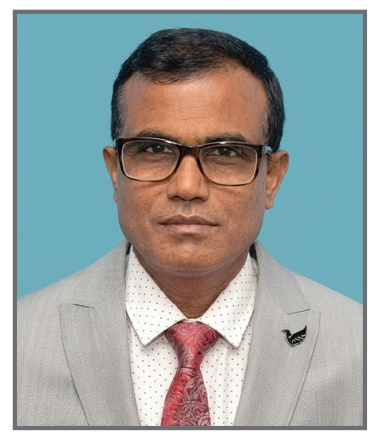
 Bikash Chandra Mallick is the Principal Chief Engineer-II at the Central Electricity Authority (CEA). He has worked extensively on policy formulation, technical studies, implementation support and inter-agency coordination focused on enabling flexible operation of coal-based power plants to support renewable energy integration throughout his career.
Notable among his acievements, he has led nationwide pilot studies demonstrating operation of coal plants at 40 per cent minimum technical load (MTL). He also authored the report on “Flexibilisation of Coal-Fired Power Plants A Roadmap for Achieving 40 per cent Technical Minimum Load”, outlining operating procedures, retrofit requirements, efficiency impacts and cost implications. His work also covers emission policy, particularly on flue-gas desulphurisation (FGD). Since 2017, he has highlighted implementation challenges related to FGD and advocated selective deployment. His studies on plant location-specific emission standards and reviews of sulphur dioxide norms contributed to broader assessments. His work has also encompassed renovation and life extension programmes, pollution control systems and technical studies to improve efficiency, operations and safety of coal-based power plants.
Earlier in his career, he worked on grid operations and protection, contributing to load shedding schemes, transmission planning, accident investigations and methodologies to enhance grid security.
According to Mallick, meeting India’s future electricity demand requires timely addition of coal capacity along with hydro, nuclear and pumped storage projects. He says, “it is essential to initiate site selection for small modular reactors, implement flexible coal operation up to 40 per cent MTL, explore two-shift operation for ageing coal plants and produce green hydrogen, while maintaining a baseline deployment of battery energy storage systems.
At the same time, he cautions that delays in implementing 40 per cent MTL could increase renewable energy curtailment. “Last year, renewable energy curtailment ranged between 4.6 and 23.4 GW for 4.25 to 8.25 hours daily. Delays in implementation could worsen this trend,” he warns.
Mallick follows a management style rooted in careful analysis, expert consultation and gap identification, while prioritising consumer welfare, sector viability and national interest.