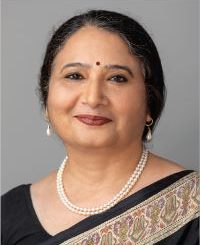
In an interview with Power Line, Minhaj Alam, IAS, Additional Chief Secretary, Government of Kerala, and Former Chairman and Managing Director (CMD), Kerala State Electricity Board Limited (KSEB), discussed Kerala’s power sector performance, KSEB’s operational and financial progress, renewable energy transition, grid modernisation, digital initiatives, e-mobility efforts, emerging opportunities and key sector challenges. Edited excerpts…
What is your assessment of the performance of Kerala’s power sector in past one year or so?
Kerala’s power sector has demonstrated notable resilience and stability despite rising demand, climatic variability and the increasing share of renewable energy in the electricity mix. The state has been able to maintain dependable electricity supply through prudent planning, sustained investments in network infrastructure, and coordinated development across generation, transmission and distribution. KSEB has initiated structured planning for resource adequacy to ensure the long-term reliability of power supply, supported by the Resource Adequacy Regulations already issued by the Kerala State Electricity Regulatory Commission. Kerala is among the early movers in institutionalising resource adequacy planning.
How has KSEB’s operational and financial performance evolved recently?
Since its inception in 1957, KSEB has grown into a large and complex utility serving nearly the entire consumer base of Kerala, with about 14.3 million consumers as of February 2026. Kerala’s power sector is built on a strong hydropower legacy, with landmark projects such as Idukki and Sabarigiri providing not only clean energy but also the operational flexibility, peaking support and grid stability that are critical for managing today’s renewable-rich power system. It owns 40 hydro generating stations, 2 thermal stations and a growing portfolio of non-conventional generation, with a total installed capacity of 4,808 MW. Its transmission system comprises 400 kV, 220 kV, 110 kV, 66 kV and 33 kV substations and associated transmission lines across the state, while the distribution network extends over 370,000 km with close to 100,000 distribution transformers. Operational efficiency has been one of the key strengths of Kerala’s power sector. KSEB maintains aggregate technical and commercial losses at around 6.6 per cent, among the lowest in the country, reflecting sustained emphasis on energy accounting, operational discipline and financial prudence. Collection efficiency has also remained consistently close to 100 per cent, supported by robust billing and consumer service systems.
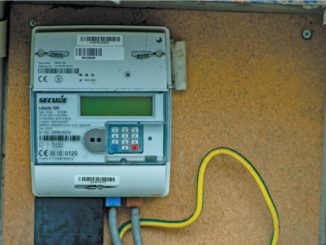
Kerala achieved 100 per cent consumer metering well ahead of many other states and, as early as 2002, transitioned from slab-based billing founded on assessed consumption to spot billing based on actual meter readings. This system also covers agricultural consumers. The shift significantly improved billing efficiency, accuracy, transparency and revenue assurance. In several other states, agricultural consumers continue to remain unmetered, making Kerala’s early achievement in universal metering particularly noteworthy. Building on this foundation, KSEB has also initiated the phased roll-out of smart metering under the Revamped Distribution Sector Scheme (RDSS), beginning with high-tension consumers, government establishments and system meters, with the objective of further strengthening energy accounting, operational efficiency and consumer service delivery.
What is Kerala’s vision for renewable energy transition, and what progress has been made?
Kerala has adopted an ambitious long-term vision for the energy transition. The state is working towards meeting its electricity requirement increasingly from renewable energy sources, with the broader objective of moving towards 100 per cent renewable electricity by 2040 and carbon neutrality by 2050, much ahead of national timelines. This transition is being supported through the expansion of solar capacity, promotion of decentralised generation, development of energy storage systems, strengthening of the transmission network, and adoption of advanced forecasting and grid management tools.
The state has made significant progress in renewable energy adoption, particularly in rooftop solar. Kerala’s total installed solar capacity has now crossed 2,000 MW, with more than 60 per cent coming from rooftop installations across about 250,000 households under KSEB’s Soura scheme and the PM Surya Ghar programme. The growth of decentralised solar capacity is contributing both to energy security and to the broader objective of reducing dependence on conventional sources. With its legacy hydroelectric systems, the total installed capacity in Kerala consists of more than 90 per cent renewable sources.
How is Kerala preparing to meet future power demand growth and strengthen grid reliability?
Kerala’s electricity demand is expected to reach around 10,000 MW by 2030-31, considerably above the projections in the Electric Power Survey of India. In preparation for this growth, KSEB is taking steps to augment internal generation capacity and develop energy storage infrastructure, including battery energy storage systems (BESS) and pumped storage projects. The 125 MW/500 MWh BESS project currently under development is expected to be the first 4-hour power supply project, a major milestone in grid-scale storage. In addition, about 500 MW/1000 MWh of BESS capacity across five locations is at various stages of implementation.
Kerala continues to be a power-importing state, with internal generation meeting less than 30 per cent of the total demand. Recognising this structural reality, KSEB has undertaken significant transmission strengthening initiatives, most notably through the TRANSGRID Special Transmission Network Development Project. The project has resulted in around a 1 per cent reduction in transmission losses and has substantially enhanced the state’s power import capability and grid stability. Another important achievement of Kerala’s power sector has been the maintenance of unrestricted power supply for nearly a decade, including during peak demand periods. Agricultural consumers in the state also receive 24×7 electricity supply, something which only a few other states can claim. This has been made possible through resource adequacy planning, timely network strengthening, improved demand forecasting, and effective coordination across the generation, transmission and distribution segments.
How is KSEB leveraging digital technologies, AI and data-driven systems to improve power sector operations?
KSEB has also begun integrating data-driven technologies into system operations. An artificial intelligence (AI)/machine learning (ML)-based short-term load forecasting tool is already in use, helping the utility improve demand prediction, optimise power procurement and strengthen operational planning. This initiative was initially piloted as one of six innovative projects under the Indo-German Energy Programme – Energy Transition with DISCOMs, implemented in collaboration with GIZ, the German development agency. Further, consumer service has been a key area of transformation for KSEB. We have significantly strengthened our digital interface through upgraded call centres, cloud telephony and digital service platforms. Key initiatives like the “Service@Doorstep” programme and a WhatsApp chatbot have brought convenience directly to our consumers. Building on this momentum, we are set to launch an AI-powered chatbot. It will be integrated across all consumer touch points to resolve queries and complaints in a more timely and user-friendly manner.
What role is KSEB playing in supporting e-mobility infrastructure in Kerala?
In the field of e-mobility, KSEB has been designated as the nodal agency for implementing the Ministry of Heavy Industries’ PM-eDRIVE scheme in Kerala. The total number of electric vehicle (EV) chargers so far has reached 2,810 across the state. A total of 277 charging stations have been uploaded on the PM-eDRIVE portal as Phase I, with financial assistance amounting to about Rs 631.2 million.
What are the biggest unresolved challenges facing the sector?
The challenges can be broadly grouped into three areas. First is resource adequacy and balancing. States like Kerala have limited internal generation and a high dependence on power purchase. With rapid growth in rooftop solar and increasing demand volatility, managing real-time balance has become more complex.
Second is infrastructure resilience, particularly in the context of climate change. Extreme weather events demand continuous investment in network hardening, undergrounding in critical areas, predictive maintenance and faster restoration mechanisms.
Third is the policy and regulatory environment, especially in the context of proposed reforms such as the Electricity (Amendment) Bill. While reforms are necessary, they must be carefully calibrated to protect universal service obligations, avoid tariff shocks, and not aggravate the financial stress of existing utilities. Another important challenge is balancing affordability with the rising cost of power procurement and infrastructure investment. In addition, the rapid pace of technological change requires continuous upskilling of manpower and timely adaptation of regulatory and operational frameworks.
What opportunities do you foresee in the next one to two years?
We see strong potential in grid modernisation, renewable integration and digital transformation. Energy storage projects also open up significant opportunities for energy arbitrage, peak load management and grid balancing, enabling utilities to optimise power procurement costs while enhancing system reliability. With the increasing adoption of rooftop solar, EVs and smart appliances, the grid is becoming more dynamic, and this creates opportunities for advanced system management and data-driven operations. The ongoing RDSS programme provides a strong platform for upgrading distribution infrastructure, deploying smart meters, expanding SCADA-DMS coverage and strengthening consumer services. At the same time, energy storage will play a critical role in managing variability and improving reliability.
(Note: Minhaj Alam was CMD of KSEB at the time of conducting the interview)