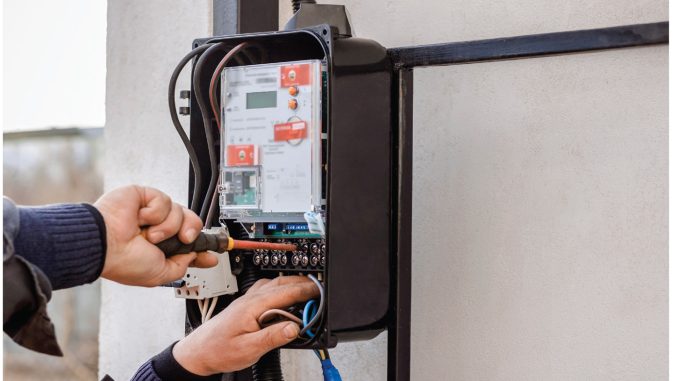
Electricity grid infrastructure requires robust management to maintain its stability, ensure reliability and avoid unforeseen disruptions. As power supply and demand continue to rise in India, the efficient operation of power systems becomes crucial. In this context, testing and measurement play an important role in ensuring reliable grid operation. Amid growing network complexity, expanding power generation capacity, transmission and distribution network augmentation and improved last-mile connectivity of electricity, testing and measurement have emerged as a key tool for ensuring the safety and security of the power system.
As of May 2026, India had an installed power generation capacity of 543 GW, supported by 508,535 ckt km of transmission lines and 1,469,041 MVA of transformation capacity. The country also recently achieved a new peak demand of 270.8 GW (as of May 21, 2026), highlighting the growth in electricity consumption and the increasing need for a dynamic power evacuation infrastructure. This is expected to drive demand for testing and measurement solutions in the coming years.
A look at the key trends in the Indian testing and measurement market, demand drivers and the future outlook…
Key policies and guidelines
Testing and measurement are undertaken to ensure that power equipment is safe and ready for long-term service. Tests are generally categorised as: type tests to ensure design compliance with standards; routine tests to ensure compliance with quality control standards; and factory/site acceptance tests during pre- and post-commissioning of any equipment.
In January 2026, the Central Electricity Authority (CEA) notified guidelines for type testing of major power sector equipment. The guidelines focused on aspects such as the periodicity of tests, reducing repetitive testing and preventing the overloading of testing facilities. Moreover, the guidelines emphasised that if the required test facilities are available in India, type tests should preferably be done within the country in an independent lab approved by the government or accredited by the national accreditation body. If an indigenous equipment type cannot be tested in India due to the lack of facilities, tests should be carried out in an accredited lab abroad. The guidelines state that in‑house type tests conducted by manufacturers are acceptable only if the in‑house lab is accredited by the national accreditation body, and the test is witnessed by a representative from the National Accreditation Board for Testing and Calibration Laboratories, a purchasing utility, or the CEA.
In May 2026, the CEA released the standard technical specifications for single-phase and three-phase CRGO (Cold Rolled Grain Oriented) core distribution transformers, specifying requirements for type tests, routine tests, short-circuit tests, impulse voltage withstand tests and acceptance tests. The guidelines set benchmarks for the design, engineering, manufacturing, assembly and inspection of distribution transformers.
Generation equipment testing and measurement
In the power generation segment, testing and measurement is the reliable way to ascertain whether the power plant equipment is safe, efficient and functioning as expected over its life cycle. Equipment such as generators, boilers and turbines operate at high temperatures and mechanical stress. Testing and measurement help identify issues such as insulation deterioration, overheating, partial discharge and control malfunctions.
Further, performance tests are essential for assessing energy losses and identifying opportunities for heat‑rate improvement. In most boiler package contracts, performance testing is included to assure both the plant operator and the EPC/OEM contractor that the equipment meets expected output and performance guarantees. In an increasingly competitive and decarbonising energy market, testing and measurement practices have direct commercial implications for capacity uprating, re-rating, refurbishment and retirement.
Transmission equipment testing and measurement
Transmission grid operation relies on the continuous measurement of parameters such as voltages, currents, phase angles, power flows and power quality to detect overload and instability scenarios or potential grid disturbances. Diagnostic testing is often practiced for condition-based maintenance of transmission assets such as towers. It helps minimise forced outages and extend the lifespan of transmission assets.
Meanwhile, the deployment of phasor measurement units (PMUs) helps monitor, control and protect the transmission grid by providing the magnitude and phase information. This measurement helps analyse the transmission grid network conditions. Wide-area management systems (WAMS) aggregate real-time data to provide transmission system operators with visibility into grid conditions, and detect abnormalities in the transmission network.
In addition, testing and measurement play a critical role in the expansion of the transmission infrastructure required to meet growing electricity demand. The testing of new substations, bays for renewable evacuation, ISTS/STU transmission corridors and other components ensures that these assets are commissioned without defects, thereby reducing the risk of forced disruptions and enhancing overall grid resilience.
In addition, equipment such as transformers, circuit breakers and relays require comprehensive testing carried out at the factory, during pre‑commissioning and through the service stages. Routine electrical tests, type tests, periodic tests and field checks are some of the key practices for transformer testing. These tests detect winding defects, insulation degradation, cooling issues, etc., ensuring that transformers operate safely and reliably at their design ratings.
Distribution equipment testing and
measurement
Testing and measurement in the power distribution segment help ensure the safe, reliable and efficient operation of the distribution network while supporting last-mile connectivity to end-consumers. Distribution network infrastructure, encompassing feeders, transformers, switchgear, etc., is vulnerable to overloads and faults. Therefore, testing and measurement are essential for identifying fault-prone areas and maintaining power quality and reliability.
As Indian distribution utilities roll out smart meters, more granular measurement becomes a priority. As of March 2026, around 45.5 million smart meters have been installed under the Revamped Distribution Sector Scheme (RDSS), with a total outlay of Rs 3,037.58 billion and a gross budgetary support of Rs 976.31 billion over a period of five years, from 2021-22 to 2025-26. Meanwhile, around 59.7 million smart meters have been installed through other schemes. This presents a significant opportunity for the testing and measurement market to ensure metering and billing accuracy. Key testing practices include tamper behaviour tests, field inspection tests, cyber tests and lab tests.
Another key priority for distribution utilities is ensuring the safe and reliable operation of distribution assets. As distribution infrastructure is often located in harsh environments with limited supervision, test practices such as earth testing, insulation and pole‑mounted transformers are important to prevent shocks, fire hazards and equipment damage. In this regard, thermal imagers and partial discharge/acoustic instruments and other similar tools play an important role in identifying loose joints and weak insulation in equipment and power distribution lines.
Challenges and the way forward
With the growing adoption of artificial intelligence (AI) and digitalisation, real-time monitoring and the streaming of continuous data into analytics platforms have become key trends in the testing and measurement market. This transition has encouraged utilities to move away from fixed‑interval testing and measurement practices towards risk‑based and condition‑based strategies. As a result, utilities are able to prioritise high‑risk assets, thereby improving asset reliability and reducing lifecycle costs.
In addition, there has been a rise in digital workflows. For example, remote and robotics-based testing of energy infrastructure located in inaccessible areas such as forests and offshore regions have increased the adoption of cloud-based testing and measurement devices and digital test management systems.
Despite the merits of AI and digitalisation, concerns remain regarding data quality, AI-model transparency and cybersecurity. Addressing these challenges will require robust regulatory frameworks to ensure data accuracy and reliability.
In recent years, institutes such as the Central Power Research Institute (CPRI) have established advanced testing facilities in India. In September 2025, CPRI inaugurated an advanced regional testing laboratory (RTL) in Nashik to offer testing services for equipment such as energy meters, smart meters and transformers. RTL is expected to reduce the time required for equipment testing and certification, strengthen the quality assurance ecosystem and enable faster procurement of equipment by utilities.
Going forward, the expansion of renewables, HVDC infrastructure, smart grids and digital substations is expected to drive demand for advanced testing and measurement solutions. At the same time, utilities’ growing focus on commercial integrity and customer trust is likely to position the testing and maintenance market as the backbone of a resilient and digitally connected power system.
Mohnish Makwana