 By Saugata Basak, Head, Maintenance Planning and MIS, PPGCL, Tata Power
Prayagraj Power Generation Company Limited (PPGCL) operates a 1,980 MW (3×660 MW) supercritical coal-based thermal power plant at Bara in Prayagraj district, Uttar Pradesh. The company, incorporated in February 2007, is owned by Renascent Power, an associate of Tata Power. The project comprises three 660 MW generating units, which were commissioned in phases during FY 2016, FY 2017 and FY 2018. The plant sources its coal from Northern Coalfields Limited (NCL), while water requirements are met from the Yamuna river. Approximately 90 per cent of the plant’s installed capacity (1,648 MW) is tied up under long-term power purchase agreements with Uttar Pradesh Power Corporation Limited, while the remaining 10 per cent (183 MW) is allocated for merchant power sales.
The plant is connected to the interstate transmission network through 765 kV and 400 kV double-circuit transmission lines and a 765/400 kV switchyard with an interconnecting transformer. It has an annual contracted coal quantity of 6.96 million tonnes.
PPGCL has improved its operational performance over the past four years, with plant availability increasing from 89.1 per cent in FY 2023 to 93.7 per cent in FY 2026. During the same period, the forced outage rate declined from 6.17 per cent to 3.07 per cent, reflecting improved maintenance practices as well as operational reliability.
PPGCL is leveraging digital tools, including Power BI, MS Project, Jupyter Notebook and advanced MS Excel, to enhance data analytics, project management and process automation. The initiatives support informed decision-making and improve operational efficiency across the organisation.
Digitalisation in PPGCL
AI-enabled operations: PPGCL has deployed Ask Rooty, an artificial intelligence (AI)-powered large language model-based virtual assistant, to simplify access to plant information and technical knowledge. The tool enables employees to retrieve operational data, equipment details, technical manuals, standard operating procedures and engineering documentation through natural language queries. By consolidating information from multiple sources into a single platform, Ask Rooty reduces the time spent searching documents, supports faster decision-making and improves knowledge sharing across the organisation. The solution also assists operations and maintenance personnel in resolving technical queries more efficiently, thereby enhancing productivity and operational support.
PPGCL has implemented AI-enabled predictive analytics to strengthen equipment condition monitoring and improve maintenance practices. The system continuously analyses real-time operational data to assess equipment health, detect anomalies and generate early alerts for potential failures. This enables maintenance teams to identify developing issues before they lead to equipment breakdowns or forced outages, facilitating timely corrective action. By supporting condition-based and predictive maintenance, the technology improves equipment reliability, reduces maintenance costs and enhances overall plant availability.
Additionally, PPGCL has deployed an AI-driven root cause analysis (RCA) platform to support the rapid diagnosis of equipment and process-related issues. The system analyses operational data to identify the most probable causes of faults and provides evidence-based recommendations for corrective action. By reducing the time required to investigate operational events and improving the accuracy of fault diagnosis, the platform supports informed decision-making, minimises equipment downtime and enhances the reliability and efficiency of plant operations. Together with predictive analytics, the RCA solution helps establish a proactive maintenance framework focused on preventing recurring failures and improving asset performance.
Start-up gap tool: PPGCL has implemented a start-up gap tool to improve the monitoring and management of boiler start-up operations. The platform integrates real-time operational data with historical benchmark performance to enable continuous assessment of the start-up process. It provides operators with visibility into parameter deviations, start-up progress, evaporation status and heating profiles, facilitating timely interventions and operational optimisation. The solution supports informed decision-making, improves start-up efficiency, enhances equipment reliability, and contributes to safe and stable plant operations.
MTM monitoring: PPGCL has deployed a metal temperature monitoring (MTM) system for continuous surveillance of critical boiler tube temperatures. The platform provides real-time monitoring of furnace superheater and final reheater tube metal temperatures, identifies abnormal temperature excursions and issues early alerts for corrective action. The solution also offers comprehensive temperature trend analysis, enabling operators to monitor equipment health and optimise boiler operation. By supporting predictive maintenance and early fault detection, the system enhances equipment reliability, minimises the risk of tube failures and unplanned outages, and improves overall plant performance.
Digital twins: PPGCL has adopted a digital twin platform for AI-enabled operational advisory and performance optimisation. By integrating real-time plant data with advanced analytics, the system evaluates equipment and process performance, recommends optimal operating setpoints and provides advisory support for both high- and low-load operation. The platform enables continuous monitoring and optimisation of plant performance, helping improve efficiency, reduce fuel consumption, lower heat rate and support data-driven operational decisions.
Energy management system: PPGCL has adopted an energy management system to enable the real-time monitoring and optimisation of energy consumption across the plant. The platform analyses equipment-wise auxiliary power consumption, evaluates energy performance under different operating conditions and identifies opportunities for efficiency improvement. By providing data-driven insights into energy use, the system supports informed operational decisions, reduces auxiliary power consumption and enhances overall plant efficiency.
Other tools: For data collection and management, PPGCL relies on OSIsoft PI and SAP, both of which have been in operation since the plant’s inception. The company has also digitised its purchase requisition and purchase order processes to streamline procurement workflows, improve efficiency and reduce processing time.
Operational flexibility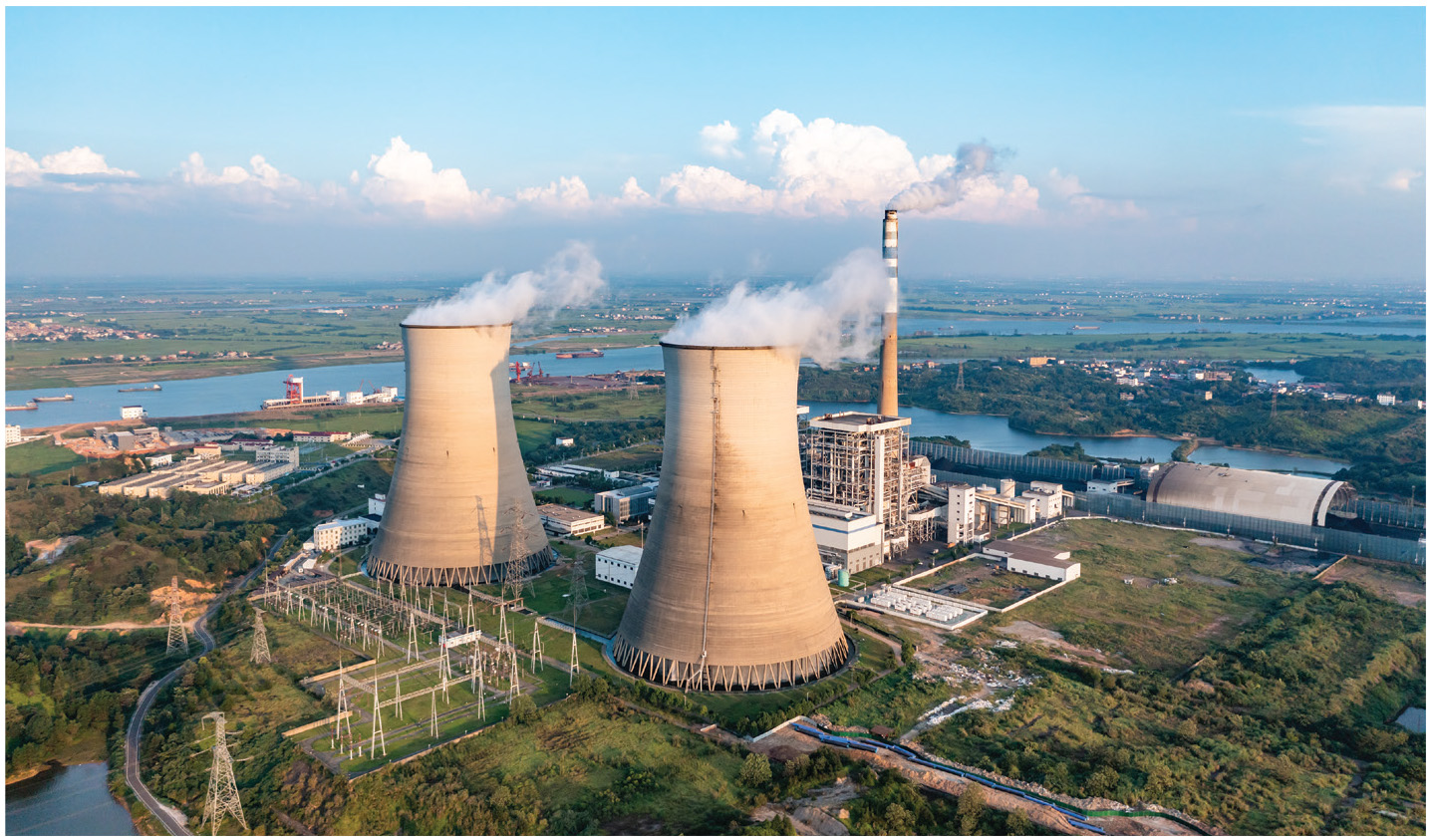
PPGCL has undertaken a series of initiatives to enhance the operational flexibility of its generating units and support reliable operation under varying grid conditions. The plant has successfully demonstrated stable operation at 55 per cent load while achieving a 1 per cent ramp-up capability, enabling smooth and controlled changes in generation. To facilitate flexible operation, the company has implemented the sequential start-up of critical equipment to improve system stability and minimise load disturbances.
It has also adopted strategic coal bunkering using higher gross calorific value coal to maintain efficient combustion and support stable performance at lower loads. Further, the integration of advanced process control into the plant’s distributed control system has enabled the real-time optimisation of combustion, load and emissions. Collectively, these initiatives have improved fuel utilisation, enhanced plant efficiency, reduced emissions during low-load operation and lowered operating costs. The successful implementation has been supported by effective planning, close coordination between operations and maintenance teams, and a strong focus on reliable plant performance.
Challenges
PPGCL’s digital transformation journey has presented a range of technological, operational and organisational challenges. One of the key challenges has been ensuring the seamless integration of new digital solutions with the plant’s existing systems and operational processes without affecting reliability or performance. Sustained commitment and active sponsorship from senior leadership have also been essential to drive the adoption of digital technologies and align transformation initiatives with the company’s long-term objectives.
Another challenge has been achieving organisation-wide acceptance and effective utilisation of digital tools across different functions, requiring continuous stakeholder engagement and capacity building. To strengthen analytical capabilities, the company has invested in structured training programmes, including Six Sigma, Lean and advanced analytics, to develop a data-driven culture and equip employees with the skills needed to leverage digital technologies.
Managing resistance to change among users accustomed to conventional systems has also been a key focus, with efforts directed towards fostering a culture of innovation and continuous improvement. Further, maintaining high standards of data quality, authenticity and security has remained a priority, necessitating robust data governance practices and cybersecurity measures to ensure the reliability and integrity of digital systems.