

Overview and capacity growth
India’s industrial energy sector is experiencing massive transformation driven by a 7.4 per cent annual increase in electricity demand from commercial and industrial (C&I) consumers. This surge has pushed record peak power demands past 271 GW, prompting a total investment of $170 billion into the energy market. Due to these aggressive investments, non-fossil fuel sources now constitute over 53 per cent of India’s overall power capacity, enabling the nation to achieve its Paris Agreement – a legally binding international treaty on climate change adopted by 195 nations in 2015 – goals ahead of schedule. Geographically, the core of this clean energy generation is highly concentrated, with five high-output states – Rajasthan, Gujarat, Maharashtra, Tamil Nadu, and Karnataka – holding over 66 per cent of the country’s total non-fossil fuel capacity.
Decarbonisation and strategic shifts
Industrial facilities are actively decoupling economic expansion from carbon emissions by integrating rooftop solar, hybrid battery energy storage systems, and bio-based alternative fuels to limit diesel dependence. C&I enterprises are deploying hybrid storage set-ups so effectively that historical backup diesel usage has dropped by up to 80 per cent. To accelerate deep decarbonisation, Union Budget 2026-27 has dedicated Rs 200 billion towards expanding carbon capture, utilisation and storage infrastructure across high-emission operations. Heavy manufacturing areas like steel and cement are focusing heavily on adopting waste heat recovery (WHR) systems, utilising blended cements, and upgrading to energy-efficient kilns and furnaces. Meanwhile, as per an ABB report, the execution gap remains a challenge, as 80 per cent of organisations possess high digital readiness for energy management but have yet to translate that intent into sustained, on-the-ground outcomes.
Policy and regulatory frameworks
The statutory foundations steering this transition include the Energy Conservation (Amendment) Act, 2022, and the Draft National Electricity Policy, 2026, which prioritise higher grid integration for distributed clean energy. These policies mandate explicit emission targets, enforce peer-to-peer energy trading via aggregators, and dictate strict renewable consumption obligations that mandate businesses to source minimum energy shares from non-fossil feeds. Furthermore, under the newly established Energy Conservation Rules, 2026, 1 metric tonne of oil equivalent (mtoe) of energy consumed is valued officially at Rs 22,774, giving the Bureau of Energy Efficiency (BEE) the leverage to penalise non-compliance stringently. To further lower long-term industrial production expenses, the Draft Electricity (Amendment) Bill, 2025 aims to completely phase out manufacturing cross-subsidies within a five-year period. Surveillance is also expanding, with manufacturers facing tighter online and physical market checks, alongside mandatory star labelling and QR code installations on consumer and industrial appliances.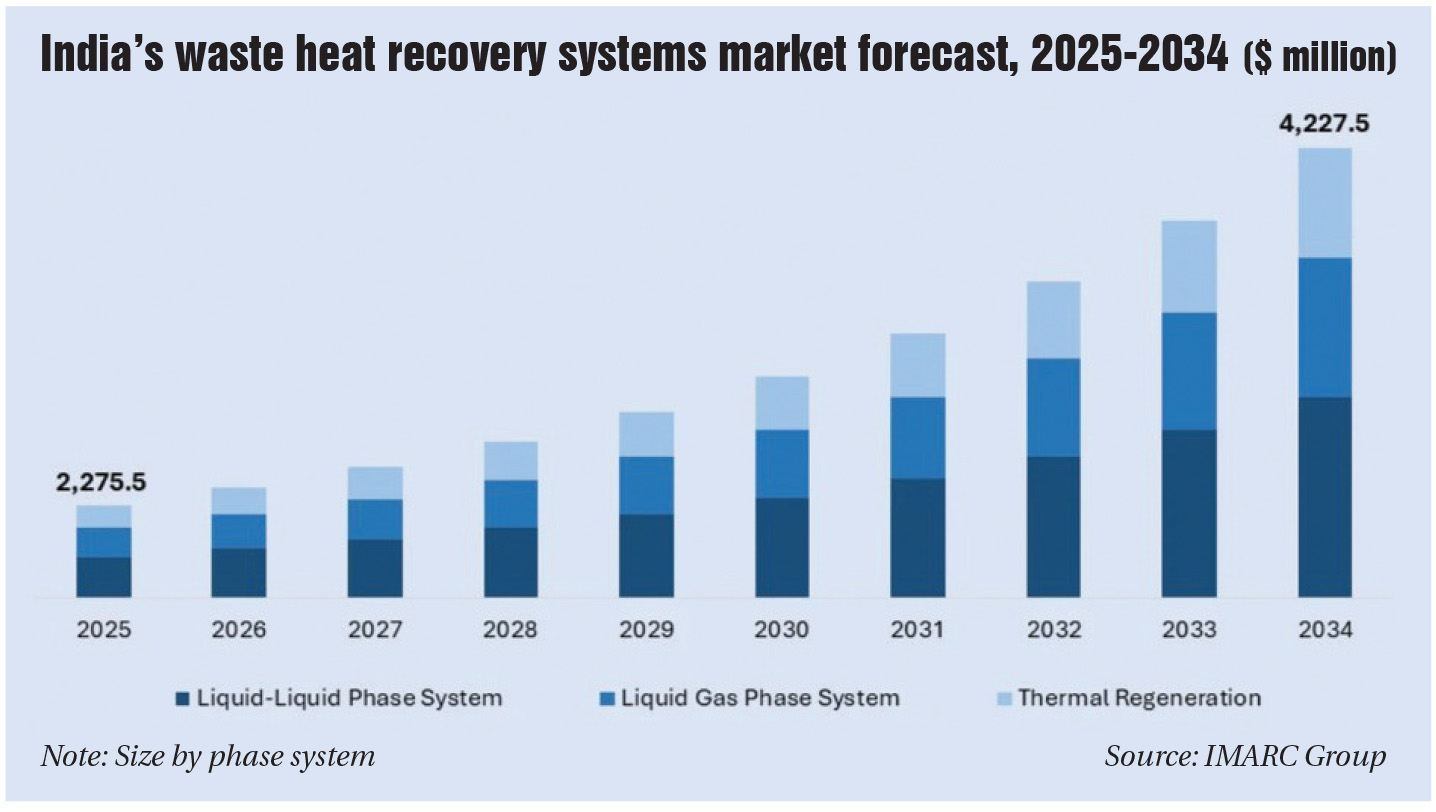
Market mechanisms and transition schemes
The BEE is currently overseeing the final stages of Perform, Achieve and Trade (PAT) Cycle-VIII (2023-24 to 2025-26), which aims to secure 0.3370 mtoe of savings across 138 designated consumers spanning six energy-heavy sectors (thermal power stations, iron and steel, cement, aluminium, pulp and paper, and textiles). The PAT scheme is a market-based mechanism that assigns specific energy reduction targets to energy-intensive sectors. Industries exceeding targets receive energy saving certificates that can be traded. However, the country is rapidly progressing beyond the historical PAT framework by shifting seven major industrial sectors over to legally binding greenhouse gas (GHG) targets managed under the Carbon Credit Trading Scheme (CCTS). The newly activated CCTS cap-and-trade market allows 490 large-scale, energy-intensive industries to trade carbon credit certificates based on their GHG emission intensity targets. For smaller operations, the government launched the Assistance in Deploying Energy Efficient Technologies in Industries & Establishments (ADEETIE) scheme to offer comprehensive end-to-end technical upgrades alongside interest subventions.
The government is also focusing heavily on modernising micro, small and medium enterprises through subsidised technology upgrades, energy audits, and shared facility centres. Under the ADEETIE programme, micro and small enterprises receive a 5 per cent interest subvention, while medium enterprises receive a 3 per cent subvention, lowering their net borrowing rates to as low as 2 per cent for efficient equipment adoption.
Through the updated Energy Conservation Act and the PAT scheme, India targets massive cuts in specific energy consumption. Key drivers include industrial electrification, WHR, and strict BEE mandates. In addition, India’s National Mission for Enhanced Energy Efficiency promotes market transformation through initiatives like financing for energy efficiency projects and framework for energy-efficient economic development.
Waste heat recovery
As the cement and steel industries are high-emission, energy-intensive sectors, the outlook in India necessitates adopting WHR systems, increasing the share of blended cements, and utilising energy-efficient kilns and furnaces.
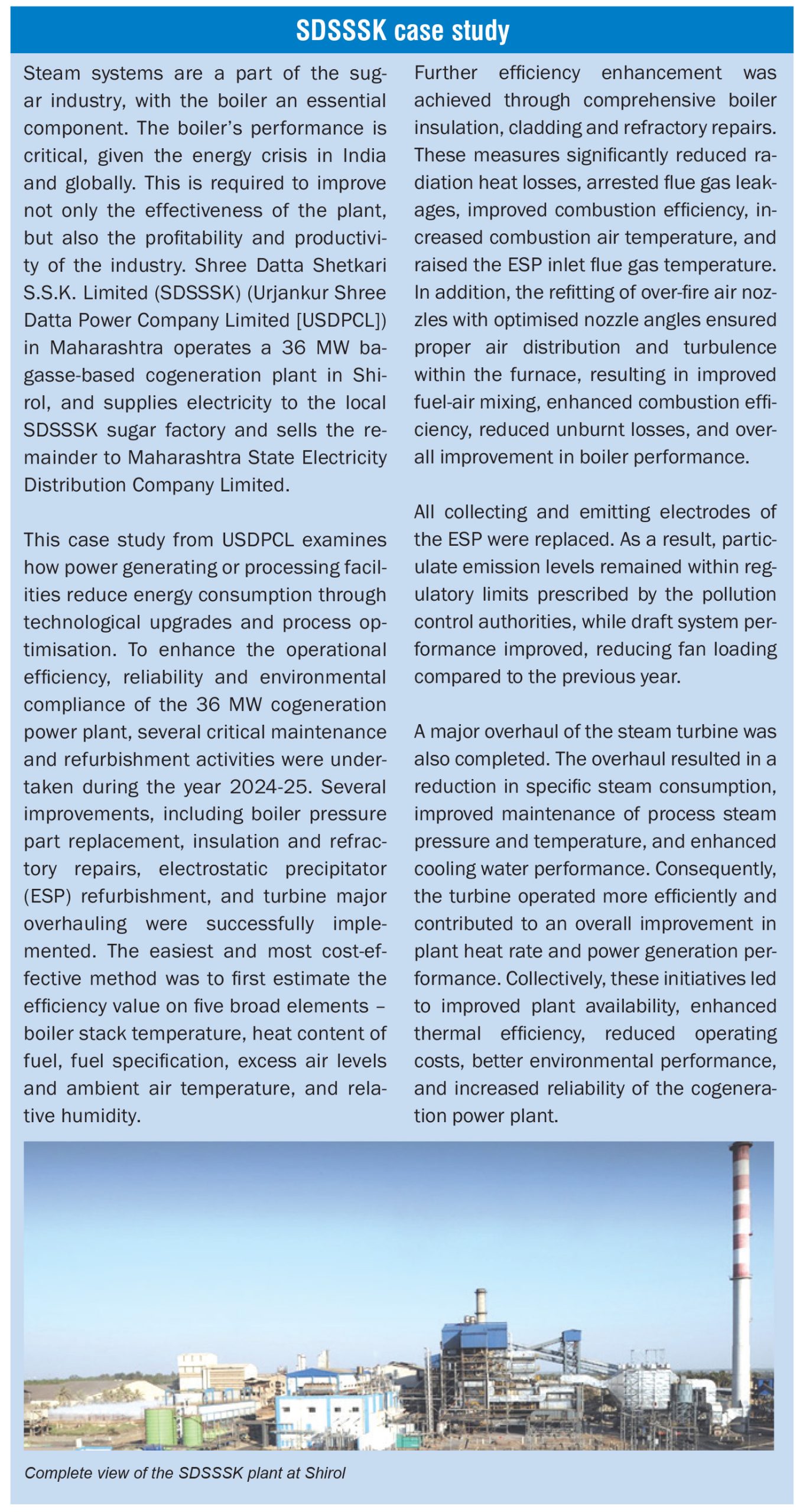
On an average, energy cost is around 40 per cent of the production cost for cement manufacturing. Cement plants in India have installed coal-based captive power plants, which have been operational for several decades. Before WHR technology was introduced, 30-40 per cent of the heat generated in cement rotary kilns and after-quenching cooler (AQC) processes of a cement plant was wasted. Therefore, efforts were made to use the waste heat productively to bring down the cost of production. As a part of this process, in 2002, cement facilities started adopting WHR systems for power generation.
These WHR plants use the heat generated through rotary kiln preheater and AQC exhaust hot gases for power generation. These hot gases are used to generate steam in steam generators (boilers), which is further used to generate electricity/power through steam turbogenerators. Typically, 20-30 per cent power requirement of the cement plant can be fulfilled using this waste heat for power generation application, which is a substantial savings/reduction in the overall cost of production.
In fact, in 2022, the “Best Practice Manual for Waste Heat Recovery in Cement Sector in India” was brought out by PwC with financial support from the European Union (EU) under its EU-India Clean Energy and Climate Partnership. As per the report, in 2016, the investment potential for WHR in India was estimated at Rs 50.81 billion. While in 2025 India’s WHR market was valued at near $2.1 billion, with the total identified WHR power generation potential across core sectors estimated at roughly $133 billion by 2031.
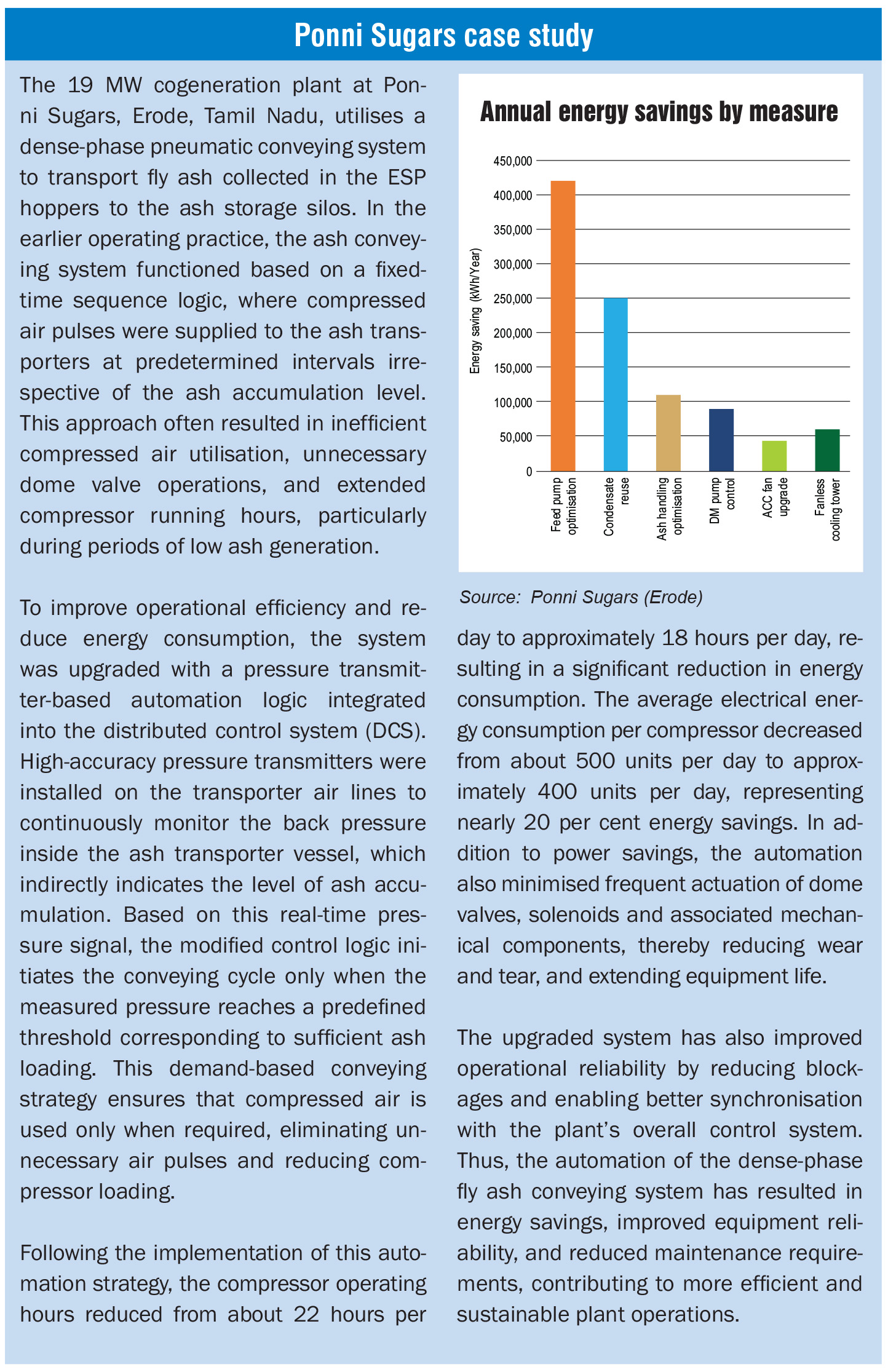
Out of this potential, over 1.3 GW is from the cement industry, where WHR can recover up to 30 per cent of a plant’s energy use. The Indian steel industry offers massive potential as well, since steel consumes roughly 60 mtoe annually. WHR can recover 20-25 per cent of this energy, as has been demonstrated by Tata Steel in India.
In 2022, Dalmia Cements invested Rs 9.29 billion for installing WHR systems, while in 2021, ACC Cements and Ambuja Cements invested Rs 7.8 billion to set up six WHR systems of 76 MW at eight kiln lines across six cement plants. Even earlier, in 2019, UltraTech Cement invested Rs 5 billion to set up five WHR plants of 63 MW capacity.
The Indian WHR system market size reached $2,275.5 million in 2025. Looking forward, the IMARC Group expects the market to reach $4,227.5 million by 2034, exhibiting a compound annual growth rate of 6.91 per cent during 2026-34. The market share is driven by industrial expansion, rising energy costs, and government regulations. Besides this, increasing production capacities catalyse demand, while high fuel prices encourage industries to adopt energy-efficient solutions.
Future outlook
India’s industrial energy efficiency is rapidly improving, driven by the need to manage rising operational costs and meet aggressive decarbonisation targets. Backed by the private and government initiatives outlined in this article, the sector appears to be on an upward trajectory.
Anita Khuller