India’s power transmission segment is witnessing steady expansion, supported by network strengthening and modernisation efforts as well as efficiency improvements. Meanwhile, increasing renewable energy integration is changing grid dynamics, bringing new challenges related to stability, asset utilisation and system planning. Transmission experts share their perspectives on recent developments, emerging challenges and the road ahead for the segment….
What is your assessment of the current state of the power transmission segment? How has it performed over the past year?
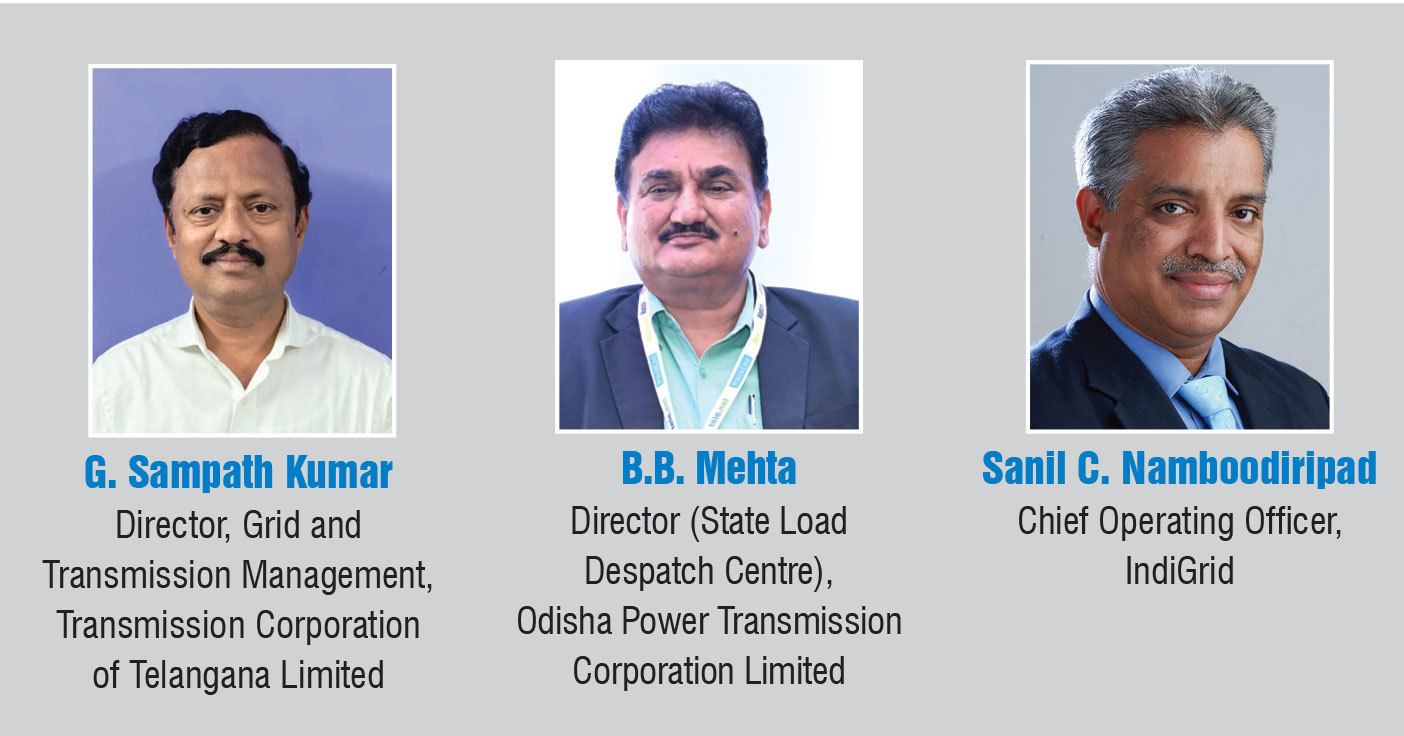
G. Sampath Kumar
As of June 2, 2014 – the day Telangana was formed – the contracted capacity stood at 7,778 MW. Over the past 10 years, further capacities have been added, including 600 MW of the Kakatiya thermal power plant (TPP); 240 MW of the Lower Jurala hydroelectric project (HEP); 120 MW of the Pulichintala HEP; 800 MW of the Kothagudem thermal power station (TPS) (Stage VII); 1,080 MW of the Bhadradri TPS (Units 1, 2, 3 and 4); 1,600 MW of the Yadadri TPS (Units 1 and 2); 1,200 MW of the Singareni TPS; 1,000 MW of the Chhattisgarh Power; 7,027 MW of solar; 128 MW of wind power; and capacity from other non-conventional energy sources and central generating stations. As a result, the contracted capacity stands at 21,940 MW.
To meet the increasing power demand for agriculture and other purposes in the state, Transmission Corporation of Telangana Limited (TGTRANSCO) has augmented the transmission capacity at the extra high tension (EHT) level, increasing the capacity from 14,973 MVA to 42,569 MVA – an addition of 27,596 MVA. Since the formation of Telangana, 158 EHT substations and 14,454 ckt km of EHT lines have been added to the system. In addition to the above, to relieve transmission congestion, ten 132 kV and eight 220 kV lines were enhanced by replacing old existing conductors with high-performance, high temperature low sag (HTLS) conductors. During 2024-25, 410 MVA at the 220 kV level and 565.5 MVA at the 132 kV level were added by constructing a 220 kV substation and two 132 kV substations, as well as augmenting power transformers in five 220 kV substations and twenty-three 132 kV substations.
In 2024-25, the state grid met a peak demand of 17,162 MW on March 20, 2025, and recorded its highest daily consumption of 335.19 MUs on March 18, 2025. The transmission system availability stands at 98.98 per cent. Notably, transmission losses have reduced from 3.31 per cent in 2014-15 to 2.19 per cent in 2024-25. The Central Electricity Authority (CEA) has adjudged the Telangana state load despatch centre (SLDC) as the best SLDC under the “Large State Load Despatch” category, awarding it the “LDC Excellence Award–2024”.
B.B. Mehta
The power transmission segment in Odisha is currently in a strong position. The available assets are being maintained effectively, ensuring high operational efficiency. The availability of the transmission network has consistently remained above the benchmarks set by the regulatory commission, reflecting robust performance.
Technical losses are well under control, at less than 3 per cent, which is a commendable achievement by sector standards. This operational strength has enabled the state to meet its highest-ever recorded power demand of over 7,000 MW, observed in June 2025, without any difficulty.
Importantly, there has never been a situation where load restrictions had to be imposed due to inadequate evacuation arrangements. Odisha has developed a sufficient and reliable transmission network, at both the intra-state and interstate levels. This has ensured the smooth evacuation and transmission of power, supporting growing demand and enabling stable system operation.
Overall, Odisha’s power transmission infrastructure is performing very well, providing a strong backbone for the state’s electricity supply.
Sanil C. Namboodiripad
The power transmission segment is entering a phase of accelerated expansion. The National Electricity Plan (NEP)-Transmission has laid out one of the most ambitious grid build-outs globally, with large-scale investment earmarked to strengthen India’s transmission and storage backbone in line with rising demand and renewable integration.
While generation capacity has grown rapidly, transmission expansion has not always kept pace. Bridging this imbalance is essential to ensure timely evacuation and maintain system reliability. Encouragingly, the pipeline of new transmission and battery energy storage system (BESS) projects has expanded over the past year, reflecting policy momentum and strong investor appetite.
On the execution side, the adoption of digital monitoring tools, drone-based route surveys and modular substation designs is improving efficiency and reducing commissioning time. The recent revision of guidelines for right-of-way (RoW) compensation is another important step towards resolving one of the sector’s longstanding challenges. Overall, the sector has demonstrated clear directional progress and policy stability. The focus must now be on scaling execution capacity and supply chain readiness to achieve the targets envisaged under the NEP.
What are the biggest challenges facing the segment, especially with the growing share of renewable energy? How can these be addressed?
G. Sampath Kumar
Telangana’s total solar capacity stands at 7,676 MW. The state government has made significant strides in promoting renewable energy and implementing energy conservation measures across Telangana. As part of this commitment, the state introduced the Telangana Clean and Green Energy Policy on January 11, 2025. An ambitious vision under this policy includes the addition of 20,000 MW of renewable energy capacity by 2030 and 40,000 MW by 2035.
As per the distributed generation model adopted by Telangana, 100 per cent of a substation’s transformation capacity is allowed for renewable energy evacuation, with a limit of not more than 50 per cent on each bus (50 per cent on the high voltage bus and 50 per cent on the low voltage bus).
TGTRANSCO’s intra-state substations can accommodate about 60 GW of potential renewable energy capacity, considering 50 per cent of their existing power transfer rating capacity. Under the Green Energy Corridors Phase III initiative, TGTRANSCO has proposed seven 400 kV, eleven 220 kV and thirteen 132 kV substations, as well as 4,839 ckt km of new EHT lines for proposed renewable energy evacuation by 2030.
With the growth of renewable energy, there is a need to adopt energy storage systems to manage and harness solar power and utilise it during peak load requirements and for grid management. With the materialisation of the estimated renewable energy capacity, all thermal plants in the state will need to operate at their technical minimum. Static synchronous compensators/bus shunt reactors have to be deployed at appropriate locations for voltage regulation and efficient grid management. With increased renewables injection, the system’s dynamic response needs to be studied in coordination with the Southern Regional Load Despatch Centre/Central Transmission Utility of India Limited. Further, the requirement for inertia in the system must be studied to ensure dynamic stability. Energy storage systems (such as BESSs and pumped storage systems) should be planned and implemented.
B.B. Mehta
With the increasing share of renewable energy, one of the foremost challenges is faced at the intra-state level. We need to establish adequate evacuation infrastructure, from the renewable project site to the nearest grid substation. In many cases, the capacity of the upstream network must also be strengthened to accommodate this additional renewable power. Another issue is the low utilisation factor of the transmission network created for renewable energy. On average, these assets operate at only about 35-40 per cent utilisation, since they are dependent on the variable generation profile of renewable energy. Yet, the full cost of transmission infrastructure development has to be borne. Moreover, additional equipment such as bus reactors and other reactive power compensation devices are needed to maintain system parameters when there is no renewable energy injection.
Further, in regions with high renewable energy potential, the upstream grid network from existing substations also needs significant strengthening. This involves replacing existing conductors with high-capacity ones or laying additional transmission lines to handle the enhanced load flow.
Sanil C. Namboodiripad
The most pressing challenge is maintaining grid reliability as India transitions to a high-renewable system. The intermittency of solar and wind generation requires the grid to handle faster ramping, bidirectional power flows and dynamic voltage control – conditions that test traditional network design and operation.
A related issue is the synchronisation of generation, transmission and storage infrastructure. Renewable-rich zones are often located far from demand centres, making timely commissioning of evacuation systems critical to prevent curtailment or stranded assets.
In the emerging battery storage space, procedural delays are a growing concern. Even after projects are tendered, extended negotiations can lead to significant time overruns. This not only delays project start-up but can also alter the underlying economics as global equipment prices shift. The transmission segment offers a proven model here: transmission service agreements are signed at the bidding stage, giving developers commercial clarity and protection from volatility. Replicating that approach for storage could accelerate financial closure and project execution.
In addition, the industry must continue to address RoW coordination, standardisation of equipment, and domestic manufacturing for advanced technologies such as gas-insulated switchgear and high voltage direct current (HVDC) components.
A sustained focus on integrated transmission – storage planning, streamlined contract structures and long-term policy consistency – will be key to ensuring a stable, future-ready grid.
What is your outlook for the power transmission segment?
G. Sampath Kumar
Based on the loadings of the EHT substations (January-April 2025), capacity additions are planned in 123 EHT substations during 2025-26 and 57 during 2026-27 to meet the anticipated peak demand. Thirty existing lines (either overloaded or not meeting N-1 criteria) are proposed for strengthening with high-performance HTLS conductors during 2025-26.
As per the NEP and the CEA’s report on the Resource Adequacy Plan, the projected peak electricity demand for Telangana for 2031-32 is 27,059 MW. TGTRANSCO plans to enhance transformation capacity by adding new substations and lines, and augmenting PTRs at the 400 kV, 220 kV and 132 kV levels. Due to stringent right-of-way (RoW) issues and high land costs, narrow-based towers/monopoles/multi-circuit towers with high-performance HTLS conductors are to be used extensively to maximise power transfer.
TGTRANSCO has a total of 16 gas-insulated substations (GISs). In the future, only GISs may need to be constructed, instead of air-insulated substations, due to land scarcity and to enhance operational reliability. Due to the growing demand for transmission network equipment, the cost of products has increased substantially, and delivery periods are not aligned with project completion periods. Timelines are being affected, and project delays have become the order of the day. The procurement of power transformers, circuit breakers, instrument transformers, isolators, porcelain insulators, EHV cable joints, etc. has become challenging, as the capacity of available original equipment manufacturers is limited and their expansion of manufacturing capacities may not be sufficient. As this equipment requires highly skilled personnel for design, manufacturing and testing, and involves substantial investment, policies specific to these manufacturing sectors have to be formulated and implemented.
B.B. Mehta
The power transmission segment plays a critical role in the integration of renewable energy and in supporting the transition towards clean energy, whether it is renewable power, green energy, or the larger goal of a net zero carbon economy at the state and national levels. This makes transmission one of the fastest growing segments of the power sector.
A number of advanced technologies are being adopted to improve the utilisation of the existing network. These include dynamic line rating devices, high-capacity conductors and grid-support technologies such as static synchronous compensators and bus reactors. These innovations allow us to optimise the transmission infrastructure and maximise the benefits from the network. However, precise and timely transmission planning has become more important than ever. In the past, transmission projects were developed after overcoming significant hurdles such as RoW issues, forest clearances and other regulatory challenges. But, in many cases, the expected demand growth or the commissioning of generation projects – especially renewable and conventional plants at the other end – did not materialise. This led to certain assets being underutilised despite huge investments.
Going forward, every state must carefully assess its demand-supply projections and examine how best to optimise the existing network before creating additional infrastructure. Periodic reviews of load and generation at both ends of the system are essential to ensure that investments in transmission are justified. It is important to remember that once a transmission line is laid, it cannot easily be reversed. With such a planned and coordinated approach, transmission investments will deliver their full value, and the segment will continue to play a pivotal role in taking the power sector to greater heights.
Sanil C. Namboodiripad
The outlook for India’s transmission segment is extremely strong and transformative. Over the coming decade, the grid is expected to expand to around 650,000 ckt km with 168 GW of interregional transfer capacity and around 47 GW of BESS capacity – an unprecedented scale of build-out.
As India’s economy advances towards its growth ambitions, a robust transmission network will be essential to power industry, and enable urbanisation and digitalisation. At the same time, achieving net zero by 2070 will depend on large-scale renewable generation, which, in turn, requires reliable evacuation and storage infrastructure. While renewables are the driver of decarbonisation, transmission and storage are the enablers that would make this transition possible.
The next phase of growth will be characterised by digitalisation, flexibility and hybridisation. We will see greater deployment of HVDC corridors, hybrid AC/DC nodes, digital substations and AI-enabled asset management systems – transforming India’s grid from a linear network into an intelligent, adaptive system.
With a clear policy road map, technological innovation and continued private sector participation, the transmission segment is set to evolve from being capacity-driven to capability-driven, forming the backbone of India’s clean energy transition and economic growth journey.